
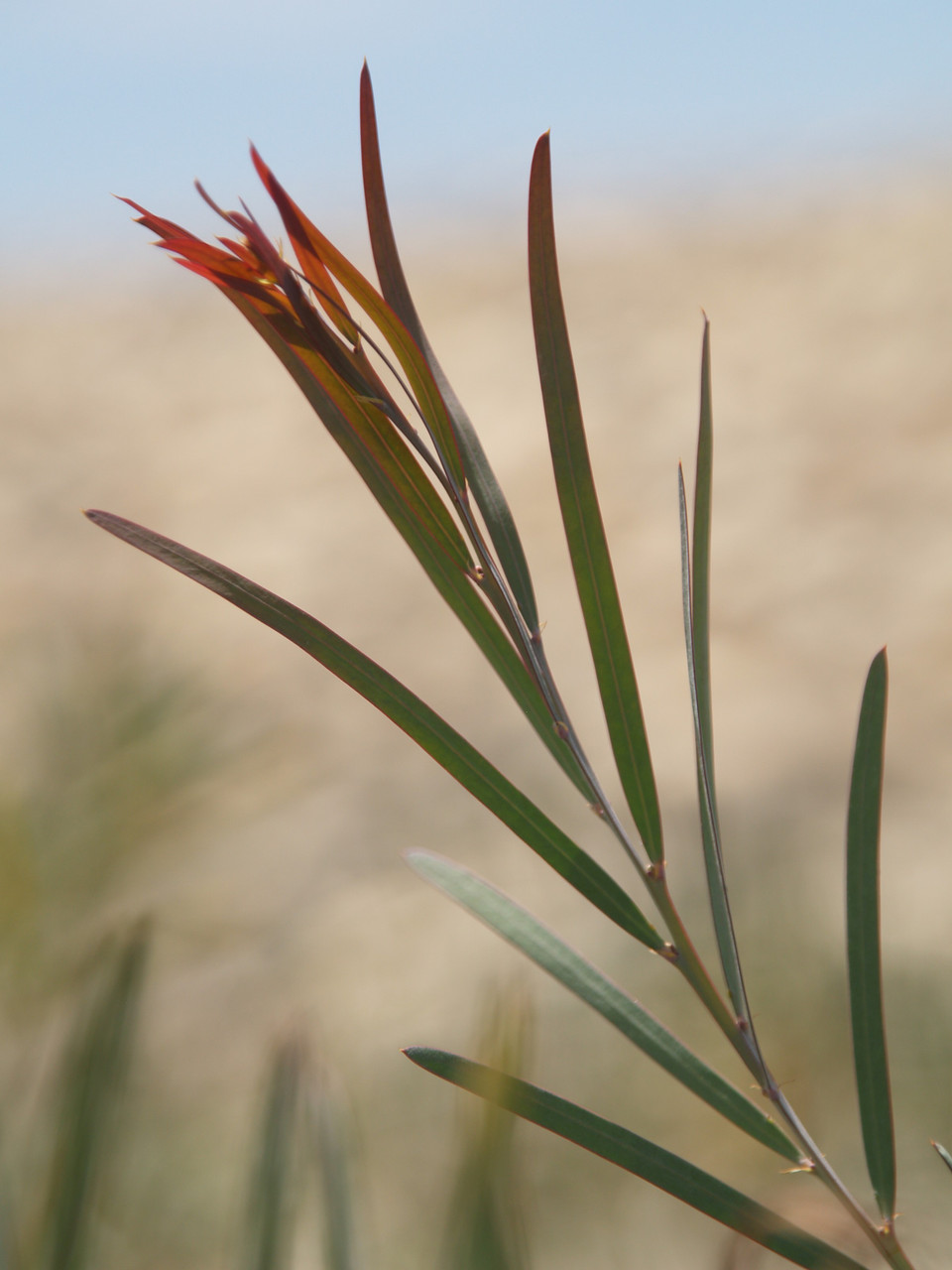
Acacia iteaphylla (Willow Wattle) is a graceful evergreen shrub native to southern Australia and valued for its weeping branches, blue-green foliage, and abundant yellow flowers. Also known as Flinders Range Wattle and Willow-leaf Wattle, it develops a broad, cascading form approximately 8–10 feet tall and 10–15 feet wide. Its narrow, lance-shaped phyllodes create a fine texture, while young stems and foliage may display an attractive reddish tinge. Pale- to bright-yellow flower clusters appear from winter through spring, bringing seasonal color and attracting bees and other beneficial pollinators. Drought tolerant and adaptable to many soil types, Willow Wattle is well suited to sunny, water-wise landscapes where its substantial mature spread can be accommodated.
Quick Facts:
Botanical Name: Acacia iteaphylla
Common Name: Willow Wattle; Flinders Range Wattle; Willow-leaf Wattle
Plant Type: Evergreen Australian shrub
Mature Height: 8–10 feet
Mature Spread: 10–15 feet
Exposure: Sun
Water: Low once established; drought tolerant
Soil: Not particular; adaptable to many soil types, with good drainage preferred
Bloom Season: Winter through spring
Flower Color: Yellow
Foliage Color: Blue Green
Growth: Evergreen
Wildlife Value: Flowers attract bees and other beneficial pollinators
Growth Rate: Moderate
Habit/Form: Broad, dense, arching, and gracefully weeping
Winter Hardiness: Reported by San Marcos Growers as hardy to approximately 15–20°F
Origin: Southern South Australia, from the Flinders Ranges west toward the Eyre Peninsula
California Native: No; native to Australia
Landscape Uses: Water-wise landscapes, informal screens, large shrub borders, background plantings, slopes, erosion-control plantings, wildlife gardens, and Mediterranean-style landscapes
Special Notes: Allow sufficient room for its 10- to 15-foot mature spread; young stems and foliage may have a reddish tint
Habit & Size: Willow Wattle develops into a large, broadly spreading evergreen shrub with intricate, angular branches and softly drooping tips. It typically reaches 8–10 feet tall and 10–15 feet wide. The narrow blue-green phyllodes create a delicate, willow-like appearance, while the arching branches produce a graceful, cascading silhouette. New stems and foliage may emerge with a distinct reddish tinge before maturing to blue green.
Cultural Requirements: Acacia iteaphylla performs best in full sun and is adaptable to a wide range of soils. Although El Nativo describes it as not particular about soil, good drainage supports its long-term health. Water sufficiently during establishment, then reduce irrigation as the root system develops. Once established, Willow Wattle is drought tolerant and requires little supplemental water. Avoid persistently wet soil and excessive summer irrigation, which can reduce vigor and longevity.
Landscape Uses: Willow Wattle is useful as a broad informal screen, background shrub, flowering accent, or structural plant in large water-wise landscapes. Its arching branches can soften walls, fences, and other hardscape elements, while its extensive spread makes it suitable for covering broad slopes and open planting areas. The blue-green foliage provides year-round contrast alongside darker green plants, and its winter and spring flowers supply color and pollinator activity during a season when fewer large shrubs are blooming. It should be given adequate room to develop its natural form without frequent size-control pruning.
Identification Note: Acacia iteaphylla is recognized by its broad, weeping habit, intricate angular branching, and numerous narrow blue-green phyllodes. Phyllodes are flattened leaf stalks that perform the function of leaves. The drooping branch tips, reddish young growth, and yellow flowers help distinguish Willow Wattle from more upright or coarsely textured acacias. Its spherical flower clusters emerge along the branches from winter through spring.
Pests and Cultural Considerations: Willow Wattle is generally a low-maintenance shrub when grown in full sun with appropriate irrigation. Poor drainage and excessive watering are more likely to cause problems than dry conditions after establishment. Light pruning after flowering can remove damaged growth or refine the plant’s outline, but extensive shearing can obscure its naturally graceful form. Plan for its mature 10- to 15-foot width rather than relying on repeated pruning to confine it to a narrow space.
Frequently Asked Questions:
Is Willow Wattle related to a true willow tree? No. Willow Wattle belongs to the genus Acacia, while true willows belong to the genus Salix. Its common name refers to its narrow, drooping, willow-like foliage and graceful branching habit.
What does the botanical name Acacia iteaphylla mean? The specific name combines Greek words associated with “willow” and “leaf,” referring to the plant’s narrow, willow-like phyllodes. The plant is consequently also known as Willow-leaf Wattle.
Can Willow Wattle grow in alkaline or lime-rich soil? The species has been described as lime tolerant. This makes it a useful candidate for some alkaline soils, although drainage and site conditions should still be evaluated before planting.
Can Willow Wattle grow near the coast? It can tolerate many coastal garden conditions, but San Marcos Growers advises against planting it where it will receive severe, direct salt spray. A protected coastal location is more suitable than an exposed oceanfront site.
Can Willow Wattle be trained as a small tree? It naturally grows as a broad, multi-branched shrub. Selective removal of lower branches can expose its branching structure and create a more tree-like appearance, but the plant will still require ample horizontal space for its spreading crown.
Does Willow Wattle produce true leaves? Mature plants primarily carry phyllodes rather than conventional leaves. These flattened, leaf-like structures perform photosynthesis and give the shrub its characteristic narrow, willow-like foliage.
- Common Name:
- Willow Wattle
- Mature Height:
- 8-10'
- Mature Spread:
- 10-15'
- Exposure:
- Sun
- Growth:
- Evergreen
- Flower Color:
- Yellow
- Soil:
- Not particular
- Foliage Color:
- Blue Green
- Flower Time:
- Winter - Spring


