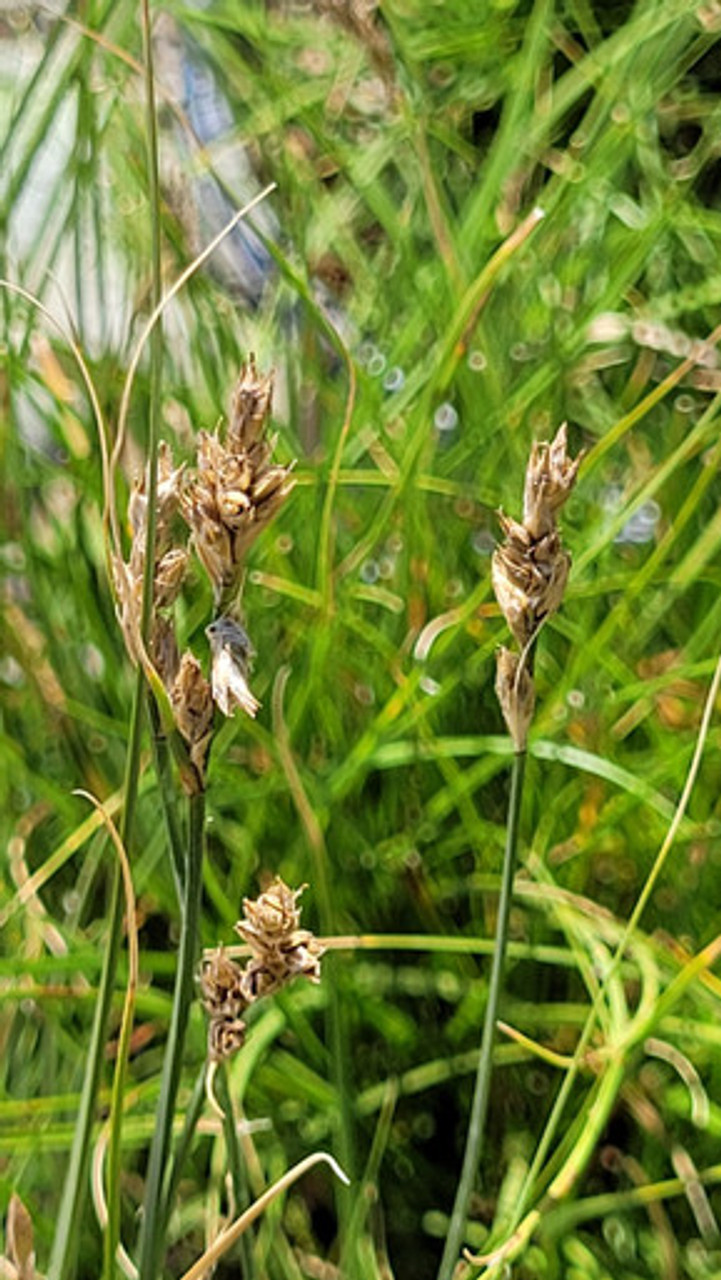

Carex praegracilis (California Field Sedge, Clustered Field Sedge) is a California native sedge widely used as a lawn substitute, meadow plant, and low-growing groundcover. It is a short, rich-green sedge that can be maintained at approximately 6–8 inches tall, or shorter if desired, and spreads by rhizomes to form a dense carpet with moderate foot traffic tolerance. If left unmowed or unmaintained, plants can grow significantly taller.
Quick Facts:
Botanical Name: Carex praegracilis
Common Name: California Field Sedge, Clustered Field Sedge
Plant Type: California native sedge; evergreen to semi-evergreen grass-like perennial
Mature Size: Typically 6–8 inches tall, or mowed shorter if desired, when maintained; may reach up to approximately 18 inches if left uncut; spreading by runners/rhizomes
Exposure: Full sun to shade
Water: Moderate to regular for best density and green color; tolerates drier conditions but will not remain as dense or lush
Soil: Adaptable; best with reasonable drainage and consistent moisture during establishment; can tolerate wet and saturated conditions
Foliage Color: Green, with possible summer browning or seasonal color change under drought or cold conditions
Wildlife Value: Provides cover and habitat value in meadow, bioswale, and native planting applications
Landscape Uses: Lawn substitute, meadow planting, groundcover, parkways, bioswales, between stepping stones, erosion control, and native gardens
Habit & Size: Forms a low, spreading mat of narrow green foliage, typically 6–8 inches tall when maintained as a lawn substitute. It can be mowed or cut shorter if desired. If left uncut, plants can grow taller, sometimes approaching 18 inches. It spreads slowly by runners or rhizomes, with faster fill-in where regular water is provided.
Cultural Requirements: Performs in full sun to shade, with best density in sun or bright part sun where irrigation is adequate. It can be grown in shade, but plants tend to elongate and usually do not fill in as densely. In too much shade, the leaf blades will flop. Regular water keeps the foliage greener, denser, and more lawn-like. It tolerates periods of drought, but under drier summer conditions the foliage may develop a brown or dry appearance. This does not necessarily harm the plant, and unsightly foliage can be cut back or mowed to refresh growth.
Landscape Uses: Useful as a California native lawn substitute, meadow sedge, low groundcover, parkway plant, or planting between stepping stones. It is appropriate for native gardens, naturalistic landscapes, bioswales, low-water plantings, and areas where a lower-maintenance alternative to traditional turf is desired. It can tolerate moderate foot traffic, though it is not a direct replacement for high-use turfgrass and will become matted with heavier traffic. Regular mowing or occasional cutting can be used to maintain a shorter, more uniform appearance.
Identification Note: Carex praegracilis is often listed at 6–8 inches tall because that reflects its maintained height as a lawn substitute. Plants can become significantly taller if left uncut or can be mowed tighter if desired.
Pests and Cultural Considerations: Generally low maintenance once established. Summer browning or a drier seasonal appearance may occur when plants are grown with limited irrigation, especially in hotter inland locations. This is usually cosmetic and does not mean the plant has failed. Cutting back or mowing can improve appearance if foliage becomes unsightly. Plants remain denser, greener, and faster spreading with regular irrigation. In shade, growth may become taller, looser, and less dense. Avoid assuming it will remain lush and turf-like under drought conditions without supplemental water.
Frequently Asked Questions:
Is Carex praegracilis native to California? Yes. Carex praegracilis is native to California and is widely used in native and low-water landscapes as a sedge groundcover or lawn substitute.
Is Carex praegracilis a good lawn substitute? Yes. It is one of the better California native sedges for lawn substitute applications, especially where moderate foot traffic, lower mowing frequency, and reduced water use are desired. It performs best as a meadow-like or low-maintenance lawn alternative rather than as a direct replacement for heavily used turfgrass.
How tall does Carex praegracilis grow? It is often listed at 6–8 inches tall because that is the common maintained height. If left uncut or unmowed, it can grow taller, sometimes up to approximately 18 inches.
Does Carex praegracilis stay green in summer? It stays greener and denser with regular water. Under drier summer conditions it may develop a brown or dry appearance, but this usually does not harm the plant. If the foliage becomes unsightly, it can be cut back or mowed to refresh growth.
How much water does Carex praegracilis need? It tolerates drier conditions once established, but it will not stay as dense, green, or lush without regular irrigation. For a lawn-like appearance, provide consistent moisture, especially during warm weather.
Can Carex praegracilis grow in shade? Yes. It can grow in shade, but it usually elongates and does not fill in as densely as it does in brighter conditions.
Does Carex praegracilis spread? Yes. It spreads slowly by runners or rhizomes. Growth and fill-in are faster with regular water and slower under drier conditions.
Can Carex praegracilis be mowed? Yes. It can be mowed or cut back to maintain a shorter, more uniform appearance. Occasional mowing can also refresh foliage after summer browning or seasonal decline.
Does Carex praegracilis tolerate foot traffic? It tolerates moderate foot traffic, especially once established, but it is not intended for the same level of wear as conventional high-use turfgrass.
How do I determine the spacing for planting larger areas with Carex praegracilis? This determination is almost entirely based on three factors: customer budget, customer expectations, and container size. Most applications for larger coverage use plugs or rosepots as the most cost-effective method for coverage. Even then, budget and expectations dictate the ultimate spacing. A 4–6 inch triangulated spacing for plugs may be appropriate if budget is not an issue and the customer wants a finished look within 6–9 months, depending on the exact project location and conditions. Plug spacing greater than 12 inches generally produces results that only very patient customers will accept. Some customers want even less space or exposed soil showing immediately after planting and opt for 4-inch or 1g containers. 4-inch containers have become an increasingly popular alternative to plug planting. 1g containers continue to be specified most frequently for mixed projects rather than widespread coverage or lawn substitute applications.
- Common Name:
- Meadow Sedge
- Mature Height:
- 12-18"
- Mature Spread:
- 1-2'
- Exposure:
- Sun/Part Sun
- Growth:
- Evergreen
- Flower Color:
- Brown
- Soil:
- Not particular
- Foliage Color:
- Green
- Flower Time:
- Spring