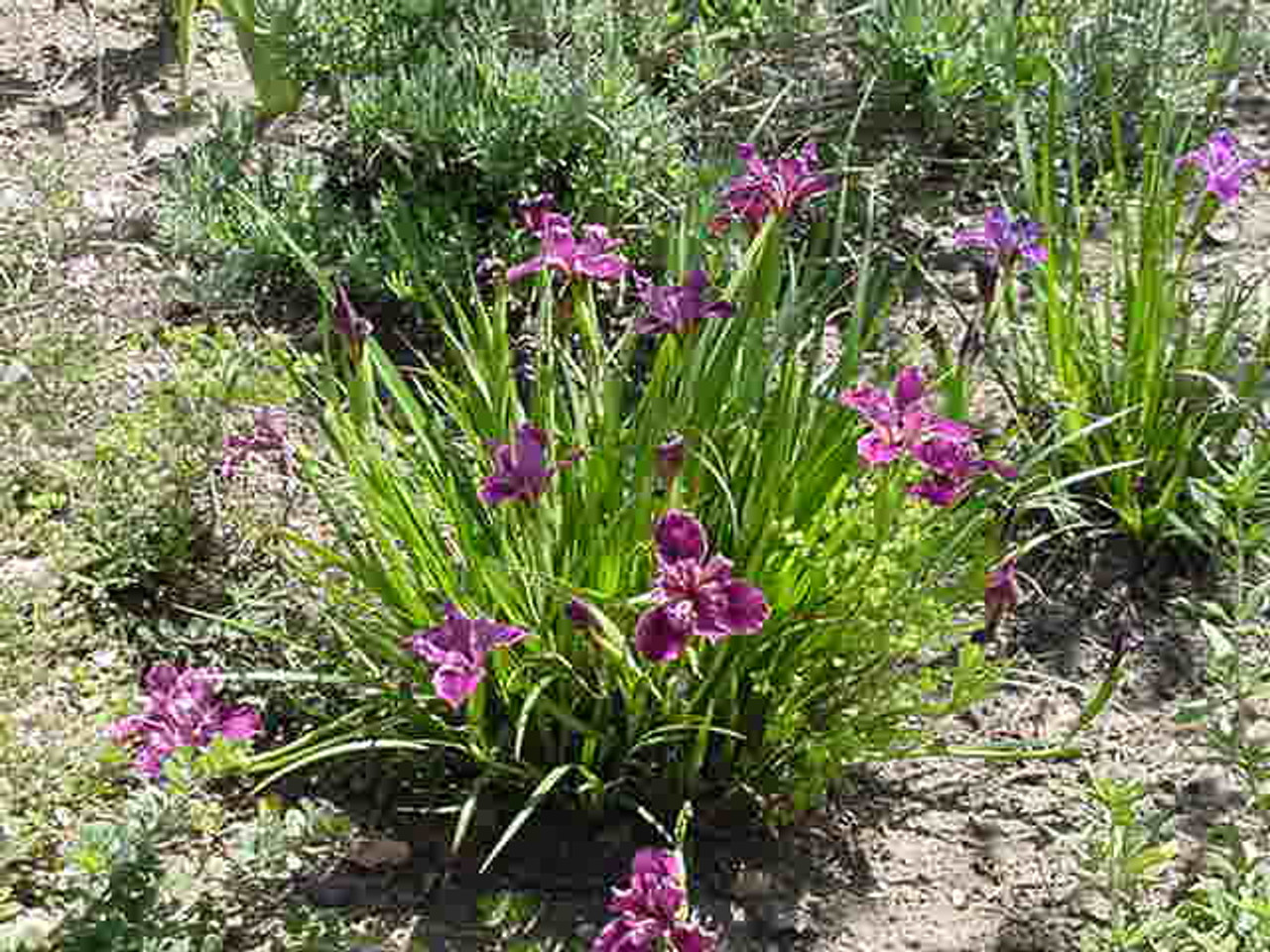


Iris ‘Pacific Coast Hybrids’ (Pacific Coast Hybrid Iris) are evergreen perennial hybrids derived from California native coastal iris species. Bred for vivid flower colors, striking patterns, and varied petal forms, they produce purple, lavender, cream, white, and multicolored blooms with contrasting signals, dramatic veining, or spotting. Flowers appear just above the strappy evergreen foliage in early spring. Plants reach approximately 12–18 inches tall and spread 1–2 feet wide. Pacific Coast Hybrid Irises are particularly effective in meadow gardens, woodland plantings, oak understories, and shaded California native-inspired landscapes. These randomized hybrids vary considerably in vigor and can be difficult to carry through summer, especially in inland Southern California.
Quick Facts:
Common Name: Pacific Coast Hybrid Iris
Botanical Name: Iris ‘Pacific Coast Hybrids’
Plant Type: Evergreen perennial iris hybrids
Mature Height: 12–18 inches
Mature Spread: 1–2 feet
Exposure: Sun to part sun; part shade to part sun preferred inland
Water: Regular to infrequent inland depending on sun exposure; avoid excessive summer moisture
Soil: Sharply drained and preferably acidic
Bloom Season: Early spring; one bloom period per year
Flower Color: Purple to white, including multicolored combinations
Foliage Color: Green
Growth: Evergreen
Wildlife Value: Flowers may provide seasonal resources for visiting insects
Growth Rate: Highly variable among individual hybrids
Habit/Form: Compact and clumping, with narrow, strappy foliage
Origin: Horticultural hybrids derived from California native coastal iris species
California Native: Native-derived hybrids rather than naturally occurring California species
Landscape Uses: Meadow gardens, woodland gardens, oak understories, shaded borders, native-inspired landscapes, naturalistic plantings, and containers
Special Notes: Randomized hybrids vary substantially in flower color, pattern, petal form, vigor, and ability to survive summer
Habit & Size: Pacific Coast Hybrid Irises form compact clumps of narrow, strappy evergreen foliage approximately 1–2 feet wide. Flowering stems rise just above the leaves in early spring and produce a single annual display of intricately patterned blooms. Plants reach approximately 12–18 inches tall while flowering.
Because these are randomized hybrids rather than a single uniform cultivar, individual plants may differ noticeably in foliage density, growth rate, flower production, color, and petal form. This variation creates a naturalistic effect but should be considered when a project requires consistent appearance or performance.
Cultural Requirements: Pacific Coast Hybrid Iris performs best in sharply draining, preferably acidic soil. Inland Southern California plantings should receive part shade to part sun, with protection from intense afternoon heat whenever possible. Plants can generally tolerate more direct sunlight in cooler coastal climates.
Water regularly to infrequently inland according to sun exposure, soil, and temperature. Plants in brighter or warmer locations may need more moisture during active growth, but excessive summer irrigation can contribute to decline. These hybrids are fussier than bearded irises and many other irises commonly grown in Southern California. Successful long-term performance depends on appropriate exposure, excellent drainage, and careful irrigation management.
Landscape Uses: Pacific Coast Hybrid Irises are well suited to meadow gardens, woodland plantings, lightly shaded borders, naturalistic landscapes, and areas beneath mature oaks where drainage is excellent. Their compact evergreen foliage provides year-round texture, while the patterned flowers create concentrated seasonal interest in early spring.
Suitable companion plants include native ferns, coral bells, woodland grasses, and other plants with compatible light, soil, and irrigation requirements. Randomized hybrids are most appropriate where natural variation is welcome. For commercial landscapes requiring consistent flower color, growth habit, or vigor, a named selection with a documented performance record may be more dependable.
Identification Note: Pacific Coast Hybrid Irises are recognized by their low clumps of strappy evergreen foliage and highly variable flowers. Blooms range from purple and lavender to cream and white, and many display multiple colors. Individual flowers may feature dramatic veining, contrasting signals, spotting, or unusual petal shapes and formations.
The compact habit, evergreen leaves, and intricately marked spring flowers distinguish Pacific Coast Hybrid Irises from taller, more uniform bearded irises. Flower and growth characteristics may differ significantly among plants within the same randomized batch.
Pests and Cultural Considerations: Pacific Coast Hybrid Irises are generally free of serious pest problems, but they can be challenging to maintain where growing conditions are unsuitable. Poor drainage and excessive summer moisture are significant causes of decline. Many randomized hybrids have difficulty over-summering in inland Southern California, regardless of exposure, and individual plants differ tremendously in vigor.
Clumps may be dug and divided in early winter to rejuvenate established plants or propagate especially desirable individuals. Some named Pacific Coast Hybrid Iris cultivars have stronger performance records than randomized seedlings. ‘Canyon Snow,’ in particular, is recognized for greater tolerance of typical garden conditions.
Frequently Asked Questions:
Can Pacific Coast Hybrid Irises be grown in containers? Yes. Their compact size makes them suitable for containers, provided the potting medium drains sharply and the plants are protected from excessive inland heat. Container irrigation should be monitored carefully during summer because continually wet soil can cause decline.
Should Pacific Coast Hybrid Iris foliage be cut back? Because the foliage is evergreen, routine seasonal cutting is usually unnecessary. Remove dead, damaged, or declining leaves selectively rather than shearing the entire clump. Cutting back healthy foliage reduces the plant’s ability to store energy.
Do Pacific Coast Hybrid Irises need fertilizer? They generally do not require heavy feeding. If growth indicates a nutrient deficiency, apply a light amount of fertilizer appropriate for acid-loving plants. Avoid overfertilizing, which can encourage weak growth.
Should mulch be placed around Pacific Coast Hybrid Irises? A light layer of mulch can help moderate soil temperature and limit weeds, but keep it away from the crown. Deep mulch or organic material packed against the base can retain excessive moisture and increase the risk of decline.
Can Pacific Coast Hybrid Irises be planted in frequently irrigated beds? They are not ideal for beds that remain consistently wet during summer. If combined with plants requiring regular irrigation, place them in the best-drained portion of the planting and avoid directing emitters toward the crown.
- Common Name:
- Pacific Coast Hybrid Iris
- Mature Height:
- 12-18"
- Mature Spread:
- 1-2'
- Exposure:
- Sun/Part Sun
- Growth:
- Evergreen
- Flower Color:
- Purple to White