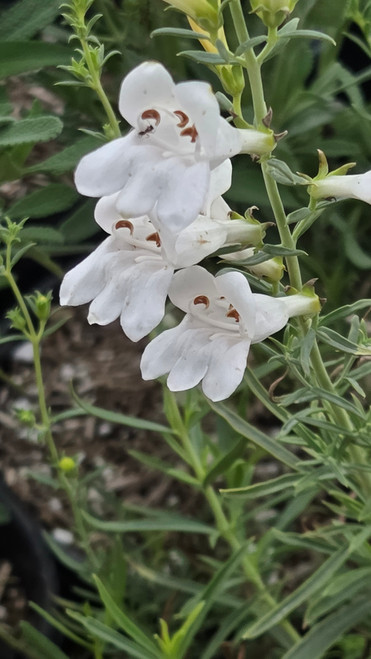
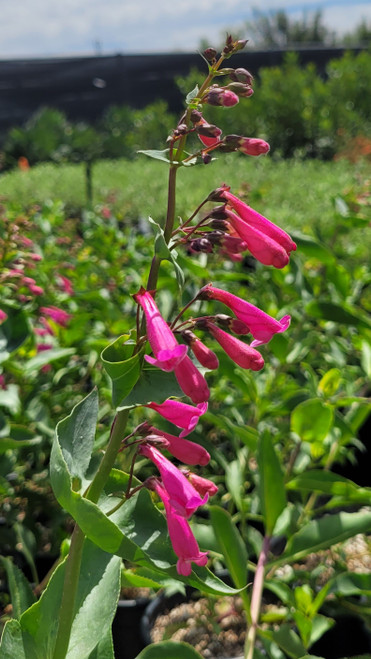
Penstemon heterophyllus ‘Electric Blue’ (Electric Blue Foothill Penstemon, Electric Blue Beardtongue, Foothill Beardtongue) is a selected garden form of Penstemon heterophyllus, a California native perennial found in foothill, chaparral, grassland, and open woodland habitats. It is grown for its compact habit, narrow evergreen foliage, and bright blue flowers.
Quick Facts:
Botanical Name: Penstemon heterophyllus ‘Electric Blue’
Common Name: Electric Blue Foothill Penstemon, Electric Blue Beardtongue, Foothill Beardtongue
Plant Type: California native cultivar; evergreen to semi-evergreen perennial.
Mature Size: Approximately 1–2 feet tall and about 2 feet wide.
Exposure: Full sun to part shade.
Water: Low to moderate; infrequent irrigation once established.
Soil: Well-drained soil preferred; avoid prolonged wet conditions.
Bloom Season: Spring to summer.
Flower Color: Blue, sometimes aging with violet or purple tones.
Wildlife Value: Attracts hummingbirds, bees, butterflies, and other pollinators.
Cold Hardiness: Hardy to approximately 15°F.
Landscape Uses: Native gardens, pollinator gardens, containers, rock gardens, borders, parkways, and low-water landscapes.
Habit & Size: Forms a low evergreen to semi-evergreen mound approximately 1–2 feet tall and about 2 feet wide, with narrow green foliage and upright flowering stems. In spring and summer, plants produce tubular blue flowers that attract hummingbirds, bees, butterflies, and other pollinators. Flower color is typically strongest in full sun and may show violet or purple tones as flowers age.
Cultural Requirements: Performs best in full sun to part shade and requires well-drained soil. Adapted to low to moderate irrigation, with best long-term performance under infrequent watering once established. In heavier soils or irrigated landscapes, avoid frequent summer water and prolonged wet conditions. Well suited to Southern California gardens, including coastal gardens, inland valleys, native plantings, pollinator gardens, and low-water landscapes. In hotter inland locations, light afternoon shade may help maintain appearance during summer heat.
Landscape Uses: Useful in California native gardens, pollinator gardens, mixed perennial plantings, parkways, containers, rock gardens, dry borders, and low-water landscapes. Its compact size makes it suitable for foreground plantings, small gardens, and massing in areas where seasonal flower color is desired without using a large shrub. Pairs well with other low-water California native and Mediterranean-climate plants such as Eriogonum fasciculatum, Artemisia californica, Salvia clevelandii, Encelia californica, Achillea millefolium, and compact native grasses.
Identification Note: Distinguished from typical seed-grown foothill penstemon by its compact garden habit and clear blue flower color. Compared with Penstemon heterophyllus ‘Margarita BOP’, ‘Electric Blue’ is generally grown for a stronger blue flower presentation rather than the more variable blue-to-purple tones associated with ‘Margarita BOP’.
Pests and Cultural Considerations: Generally low maintenance when planted in well-drained soil. Root and crown problems can develop where drainage is poor or irrigation is excessive, particularly during warm weather. Plants may be cut back or lightly trimmed after flowering to improve appearance and encourage fresh growth. Avoid heavy fertilization, overly rich soils, and frequent summer irrigation, which can reduce longevity and produce weak growth.
Frequently Asked Questions:
Is Penstemon heterophyllus ‘Electric Blue’ native to California? ‘Electric Blue’ is a selected garden form of Penstemon heterophyllus, a California native species. The cultivar itself is a horticultural selection.
How large does Electric Blue Foothill Penstemon grow? It typically forms a compact mound about 1–2 feet tall and about 2 feet wide, with flowering stems rising above the foliage.
What color are the flowers? Flowers are blue, often with violet or purple tones as they age.
When does it bloom? Bloom is typically in spring and summer, with the heaviest flowering usually occurring in spring to early summer in Southern California.
Does it attract hummingbirds? Yes. The tubular flowers attract hummingbirds, bees, butterflies, and other pollinators.
How much water does it need? Once established, it performs best with low to moderate irrigation. Infrequent deep watering is preferable to frequent shallow irrigation.
Can it grow in containers? Yes. Its compact habit makes it suitable for containers, provided the potting mix drains well and plants are not kept excessively wet.
Should it be cut back after flowering? Light trimming after bloom can improve appearance and encourage fresh growth. Avoid severe pruning into old woody growth.
What problems should be avoided? Poor drainage, excessive irrigation, overly rich soils, and heavy fertilization can reduce plant longevity and lead to weak growth or root and crown problems.
- Common Name:
- Foothill Penstemon Selection
- Mature Height:
- 1-2'
- Mature Spread:
- 1-2'
- Exposure:
- Sun/Part Sun
- Growth:
- Evergreen
- Flower Color:
- Blue/Purple