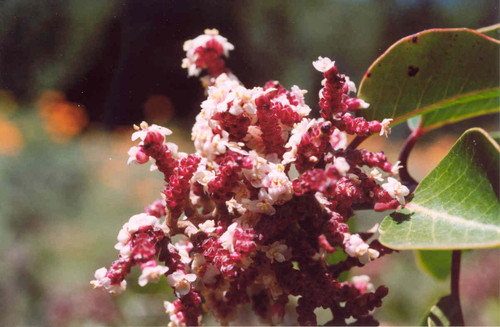
Rhus integrifolia (Lemonade Berry) is a long-lived California native evergreen shrub valued for its leathery green foliage, drought tolerance, and habitat value. Native to Southern California and Baja California, it is a characteristic species of coastal sage scrub and chaparral. Its broad, dense form makes it useful in native landscapes, coastal gardens, and restoration projects where there is room for a substantial shrub.
-
Botanical Name: Rhus integrifolia
-
Common Names: Lemonade Berry, Lemonade Sumac
-
Plant Type: California Native Evergreen Shrub
-
Height: 6–10 ft; potentially taller with age
-
Spread: 10–15 ft; potentially wider with age
-
Exposure: Full Sun to Light Shade; Part to Mostly Shade in Hot Inland Locations
-
Water Needs: Very Low Once Established
-
Bloom Color: Light Pink to White
-
Bloom Season: Winter through Spring
-
Wildlife Value: Pollinator Friendly; Food, Shelter, and Nesting Habitat for Birds and Small Mammals
-
Origin: Southern California and Baja California
-
Soil Requirements: Well Drained Preferred
Habit & Size: Develops a rounded to spreading canopy with sturdy branching. Typical landscape dimensions are 6–10 feet tall and 10–15 feet wide, although older specimens can become substantially larger under favorable conditions. Thick, leathery leaves have smooth to irregularly toothed margins, dark green upper surfaces with pale veining, and lighter green undersides. Clusters of small light pink to white flowers appear from winter through spring, followed by fuzzy, sticky reddish fruits.
Cultural Requirements: Performs well in full sun to light shade along the coast. In hotter inland locations, part shade or even mostly shade can improve foliage quality and reduce heat stress, particularly during establishment. Adapts to a range of soil types where drainage is adequate. Avoid prolonged saturation, and water new plants consistently while allowing the soil to drain between irrigations. Reduce watering as roots develop into the surrounding soil; established plants generally need very little supplemental irrigation.
Plant during the cooler months, approximately October through March in Southern California, to take advantage of lower temperatures and seasonal rainfall. Spring and summer planting carries a greater risk of establishment failure, especially inland, and requires closer attention to root-zone moisture and exposure. Newly installed plants need establishment care despite the species’ eventual drought tolerance.
Landscape Uses: Useful as a tall informal hedge, privacy screen, windbreak, or background shrub in California native and coastal landscapes. Selective pruning can reveal its branching structure to create a small multi-trunk tree. For foundation plantings, provide enough distance from buildings and walkways to accommodate its broad canopy.
Well suited to revegetation, habitat restoration, and erosion control on slopes once established. Flowers support bees and other pollinators, fruits provide seasonal forage, and dense branching offers shelter and nesting sites for birds and small mammals.
In defensible-space designs, consider mature size, separation from other vegetation, and regular removal of accumulated dead material.
Identification Note: Distinguished by relatively flat, rounded to oval leaves and clusters of fuzzy reddish fruits. Compared with the closely related Sugar Bush (Rhus ovata), its leaves are generally flatter rather than strongly folded and pointed. The common name refers to the tart coating on its edible fruits, which have traditionally been steeped in water to make a lemonade-like beverage. The fruits contain little flesh and can taste astringent or slightly bitter.
Pests and Cultural Considerations: Generally free from serious pest problems when appropriately sited. Poor drainage and excessive irrigation, particularly during warm weather, can compromise root health and longevity.
Tolerates substantial pruning, but selective cuts usually preserve a more attractive structure than repeated shearing. Maintaining it as a small shrub requires ongoing size control, making it a less practical choice for narrow planting beds. Removing flowering or fruiting branches also reduces seasonal wildlife resources. Its sap may irritate sensitive skin; gloves are a sensible precaution when handling freshly cut material.
Frequently Asked Questions:
Does Lemonade Berry tolerate salt-laden coastal winds?
Yes. It tolerates salt-laden winds and is useful in exposed coastal landscapes. This tolerance does not imply suitability for persistently saline or waterlogged soil.
How cold hardy is Rhus integrifolia?
Published nursery and botanic garden references list cold hardiness at approximately 15–20°F. Plant maturity, freeze duration, and local conditions affect performance, so this range is a general guide rather than a guaranteed damage threshold.
How quickly does Lemonade Berry grow?
Growth can be slow initially, then accelerate as the root system develops. When planning screens and mixed borders, allow for this later increase rather than judging spacing needs by a young plant’s early growth.
- Common Name:
- Lemonade Berry
- Mature Height:
- 6-10'
- Mature Spread:
- 10-15'
- Exposure:
- Sun/Light Shade
- Growth:
- Evergreen
- Flower Color:
- Light Pink
- Soil:
- Well drained best
- Foliage Color:
- Green
- Flower Time:
- Winter - Spring