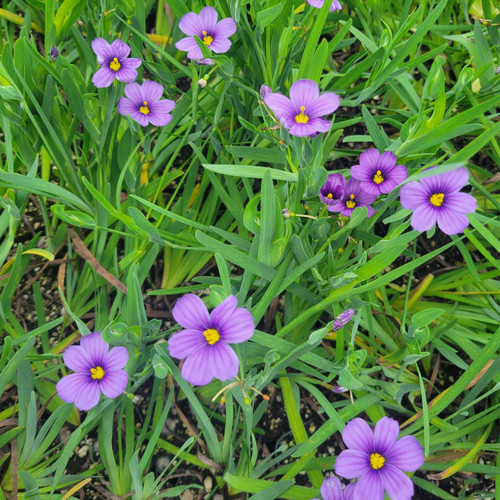
Sisyrinchium bellum (Blue-eyed Grass) is a grass-like California native perennial widely distributed throughout the state, from high-elevation forests to coastal bluffs, grasslands, valleys, foothills, and woodland edges. Despite its common name, Blue-eyed Grass is not a true grass but a member of the iris family (Iridaceae). It grows in patches of narrow, green blades, typically 8–12 inches tall, topped in late winter through spring with pin-striped indigo-blue to blue-violet flowers with yellow centers. In Southern California landscapes, it is useful in native gardens, pollinator plantings, meadow-style landscapes, borders, containers, and water-wise plantings where seasonal dormancy is acceptable. Blue-eyed Grass is tolerant of most soil types as long as drainage is good, prefers full sun to part shade, and readily self-sows under favorable conditions. It is summer dormant in most Southern California gardens; regular watering may delay or prevent dormancy along the coast, while excessive warm-season irrigation can lead to root rot and plant loss in inland areas. Various selections exist, including regional forms, color variants, and dwarf selections such as ‘Rocky Point’, ‘Fort Bragg’, ‘San Simeon’, and others.
Quick Facts:
Botanical Name: Sisyrinchium bellum
Common Name: Blue-eyed Grass
Plant Type: California native perennial
Mature Size: Approximately 8–12 inches tall and 6–12 inches wide
Exposure: Full sun to part shade
Water: Low once established; avoid excessive summer irrigation in warm inland areas
Soil: Tolerant of most soil types if well-drained
Bloom Season: Late winter through spring
Flower Color: Indigo-blue to blue-violet or purple, often pin-striped, with yellow centers
Foliage Color: Green
Seasonality: Summer-dormant in most Southern California gardens
Wildlife Value: Flowers attract native bees and other beneficial pollinators
California Native: Yes
Landscape Uses: Native gardens, pollinator gardens, borders, pathways, rock gardens, meadow plantings, woodland edges, containers, naturalized plantings, and water-wise landscapes
Habit & Size: Blue-eyed Grass forms tidy patches of narrow, sword-like to scalpel-like green foliage, typically reaching 8–12 inches tall and 6–12 inches wide. Slender flowering stems rise above the foliage from late winter through spring and carry pin-striped indigo-blue to blue-violet flowers with yellow centers. The flowers open during daylight and may close at night or during cloudy weather. Where conditions are favorable, plants can self-sow and form naturalized colonies or drifts over time.
Cultural Requirements: Sisyrinchium bellum performs best in full sun to part shade and adapts to most well-drained soils. Once established, it requires relatively little supplemental water. In most inland Southern California gardens, plants naturally enter summer dormancy and should receive minimal irrigation during the warmest months. Coastal conditions and regular watering may keep plants active longer, but inland landscapes should avoid frequent summer irrigation because wet soil during dormancy can cause root rot, decline, and mortality.
Landscape Uses: Blue-eyed Grass is useful in California native landscapes, pollinator gardens, rock gardens, meadow plantings, woodland edges, borders, pathways, containers, and naturalistic low-water landscapes. Its compact size makes it especially useful for small spaces, foreground plantings, and seasonal accents among other low-growing natives. Self-sowing can create attractive patches or drifts, making it a good choice for naturalized plantings where reseeding is acceptable.
Identification Note: Sisyrinchium bellum is recognized by its fan-like clumps of narrow iris-like foliage and pin-striped indigo-blue to blue-violet flowers with yellow centers. Although commonly called Blue-eyed Grass because of its grass-like leaves, it belongs to the iris family rather than the grass family. Selected forms such as ‘Rocky Point’, ‘Fort Bragg’, ‘San Simeon’, and others may differ in flower color, plant size, regional origin, or dwarf habit.
Pests and Cultural Considerations: Blue-eyed Grass is generally free of significant pest and disease problems when planted in well-drained soil and managed according to its seasonal dormancy. The most common cause of failure is excessive summer irrigation, especially in hot inland gardens. Plants may self-sow readily where conditions are favorable; spent flowers can be removed if reduced reseeding is desired. Older clumps may be divided if they become crowded or decline in vigor.
Frequently Asked Questions:
Is Sisyrinchium bellum native to California? Yes. Blue-eyed Grass is native throughout much of California and occurs in a wide range of habitats, from high-elevation forests to coastal bluffs, grasslands, valleys, foothills, and woodland edges.
Is Blue-eyed Grass actually a grass? No. Despite its common name, Blue-eyed Grass is not a true grass. It is a member of the iris family, Iridaceae.
How large does Blue-eyed Grass grow? It typically grows about 8–12 inches tall and 6–12 inches wide, forming patches of narrow green foliage. Seed grown material can be variable.
When does Blue-eyed Grass bloom? Bloom typically occurs from late winter through spring, with pin-striped indigo-blue to blue-violet flowers held above the foliage.
Does Blue-eyed Grass go dormant? Yes. In most Southern California landscapes, it becomes summer dormant. Coastal gardens with regular irrigation may experience delayed or reduced dormancy.
How much water does Blue-eyed Grass need? Once established, it requires relatively little water. Inland landscapes should avoid frequent warm-season irrigation, especially during dormancy.
Does Sisyrinchium bellum spread? Yes. It readily self-sows under favorable conditions and can gradually form naturalized patches or drifts.
What growing conditions does Blue-eyed Grass prefer? It prefers full sun to part shade and tolerates most soil types as long as drainage is good.
Is Blue-eyed Grass good for pollinator gardens? Yes. The flowers attract native bees and other beneficial pollinators, making it useful in California native and wildlife-friendly landscapes.
Can Blue-eyed Grass be used in containers? Yes. Its compact habit and seasonal bloom make it suitable for containers, provided the potting mix drains well and plants are not overwatered during summer dormancy.
What are ‘Rocky Point’, ‘Fort Bragg’, and ‘San Simeon’? These are selected forms of Sisyrinchium bellum grown for regional characteristics, flower color differences, compact or dwarf growth, or other ornamental traits while retaining the species’ California native heritage.
- Common Name:
- Blue-eyed Grass
- Mature Height:
- 8-12"
- Mature Spread:
- 6-12"
- Exposure:
- Sun/Light Shade
- Growth:
- Drought Dormant
- Flower Color:
- Purple
- Soil:
- Well drained best
- Foliage Color:
- Green
- Flower Time:
- Winter - Spring