Teucrium glandulosum (Cedros Island Germander) is a selection of a desert germander native to Cedros Island, off the Pacific coast of Baja California, Mexico. Introduced into California horticulture through collections made by Santa Barbara Botanic Garden, this evergreen subshrub is valued for its long bloom season, drought tolerance, and adaptability to a wide range of Southern California garden conditions. Although the species occurs across portions of the Sonoran Desert region, the Cedros Island collection has proven particularly well suited to Mediterranean-climate landscapes.
- Botanical Name: Teucrium glandulosum
- Common Names: Cedros Island Germander, Sticky Germander
- Plant Type: Evergreen Subshrub
- Height: 2–3 ft
- Spread: 2–3 ft
- Exposure: Full Sun to Light Shade
- Water Needs: Low to Moderate
- Bloom Color: White with Purple Veining
- Bloom Season: Spring through Fall
- Wildlife Value: Pollinator Friendly
- Origin: Cedros Island, Baja California
- Deer Resistance: Moderate
- Soil Requirements: Well Drained
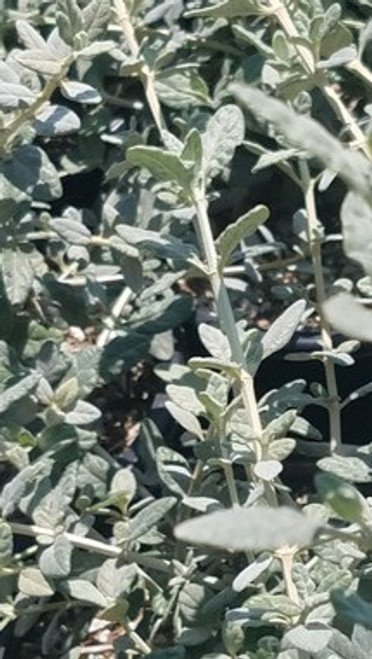
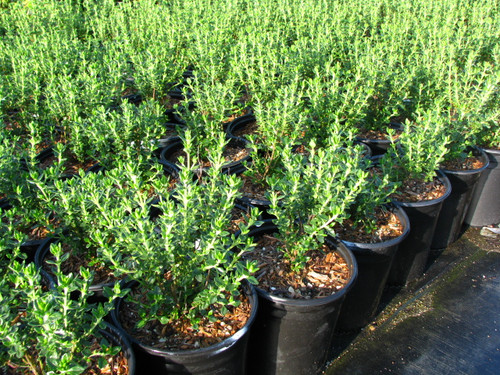
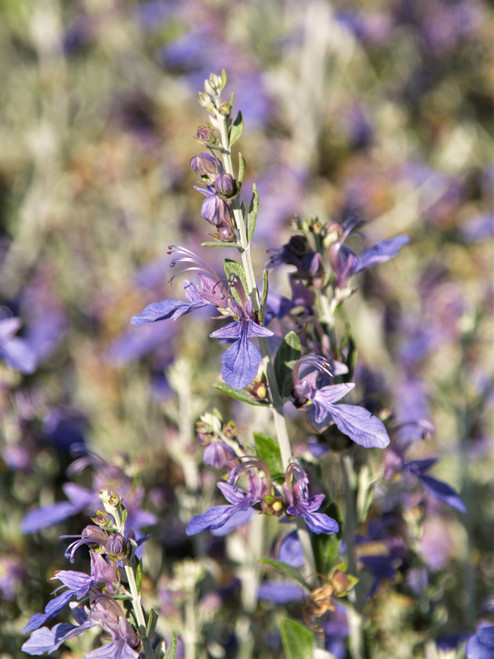
Habit & Size: Forms an open, spreading mound approximately 2–3 feet tall and wide with bright green stems and small aromatic leaves. The foliage is slightly glandular and sticky to the touch, giving rise to the common name Sticky Germander. White flowers marked with purple veining are produced heavily in spring and often continue sporadically through summer and fall. The flowers attract native bees and other pollinators.
Cultural Requirements: Performs best in full sun to light shade and adapts to a variety of well-drained soil types. Requires occasional irrigation during establishment and performs well with infrequent to occasional water once established. Well suited to Southern California landscapes, including coastal gardens, inland valleys, rocky slopes, and low-water plantings. Tolerates heat, reflected heat, seasonal drought, coastal influence, and light frost. Deadheading spent flowers may improve appearance and encourage additional bloom.
Landscape Uses: An excellent choice for California native gardens, pollinator gardens, dry meadow plantings, rock gardens, slopes, and low-water landscapes. Useful as a foreground perennial, informal border plant, or filler among larger California native shrubs and Mediterranean-climate species. Its extended bloom season, compact size, and fine texture make it particularly useful in mixed perennial plantings.
Identification Note: Distinguished by its bright green stems, lightly glandular foliage, and white flowers marked with purple veining. Unlike many commonly grown germanders, the foliage is green rather than gray and the flowers are white rather than blue or lavender.
Pests and Cultural Considerations: Generally low maintenance and relatively trouble free. Best performance is achieved in well-drained soils with good air circulation. Excessive irrigation and poorly drained soils may reduce longevity. Periodic deadheading and light pruning can improve appearance and maintain a dense habit.
Frequently Asked Questions:
Is Teucrium glandulosum native to California? Teucrium glandulosum occurs naturally in the Sonoran Desert region, including southeastern California, Arizona, Baja California, and Baja California Sur. The Cedros Island form offered in cultivation originates from Cedros Island off the Pacific coast of Baja California, Mexico. Cedros Island is generally considered the southernmost outpost of the California Floristic Province, making this plant especially relevant to California native, Baja California, and Mediterranean-climate landscape palettes.
Is Cedros Island Germander evergreen? Yes. Cedros Island Germander is an evergreen subshrub in most Southern California landscapes, including cooler inland and foothill areas where temperatures remain within its normal hardiness range. Plants may show some seasonal color change or minor foliage stress after colder weather, but they generally retain year-round structure and green foliage unless exposed to unusually severe frost.
How cold hardy is Teucrium glandulosum ‘Cedros’? Published nursery references list Teucrium glandulosum ‘Cedros’ as hardy to approximately 25–30°F. In colder Southern California locations, plant it in full sun, well-drained soil, and avoid excessive winter irrigation to support best cold-season performance.
Is Teucrium glandulosum drought tolerant? Yes. Once established, Cedros Island Germander performs well with infrequent to occasional irrigation and is well suited to water-wise, Mediterranean-climate, and low-water landscapes.
Does Cedros Island Germander attract pollinators? Yes. The white flowers with purple veining attract native bees and other pollinating insects, especially during the long spring bloom season and intermittent summer-to-fall bloom.
Can Cedros Island Germander grow near the coast? Yes. Its Cedros Island origin makes it well adapted to coastal influence, and it also performs well in inland Southern California gardens when planted in full sun to light shade with well-drained soil.
Is Cedros Island Germander appropriate for California native gardens? Yes. Although the Cedros Island collection is from Baja California, it fits well within California native and California Floristic Province-inspired gardens. It combines drought tolerance, pollinator value, long bloom season, and strong adaptation to Mediterranean-climate landscapes.
- Common Name:
- Sticky Germander
- Mature Height:
- 2-3'
- Mature Spread:
- 2-3'
- Exposure:
- Sun/Light Shade
- Growth:
- Evergreen
- Flower Color:
- White/Purple Veining
- Soil:
- Well drained best
- Foliage Color:
- Green
- Flower Time:
- Spring - Fall