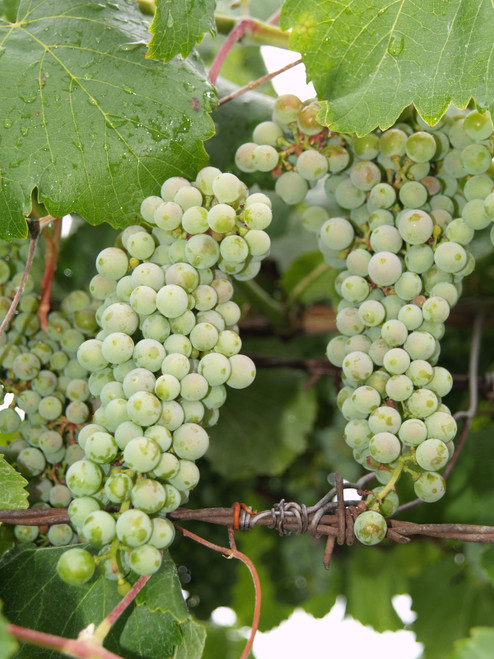
Vitis californica (California Wild Grape, California Grape) is a fast-growing deciduous woody vine native to California and northern Baja California. It occurs naturally in riparian habitats such as streambanks, river corridors, floodplains, and canyon bottoms. This dioecious species is commonly used in California native landscapes, habitat restoration projects, and water-wise plantings where it provides seasonal shade, wildlife habitat, and vigorous screening on arbors, fences, pergolas, trellises, and other structures.
Quick Facts:
Botanical Name: Vitis californica
Common Name: California Wild Grape, California Grape
Plant Type: California native deciduous woody vine
Mature Size: Variable; commonly 20 feet or more depending on support structure and pruning
Exposure: Full sun to partial shade
Water: Low to moderate; drought tolerant once established, with stronger growth where occasional deep irrigation is provided
Soil: Adaptable to well-drained clay, loam, sandy, rocky, decomposed granite, and alluvial soils
Bloom Season: Spring
Flower Color: Greenish-yellow
Foliage Color: Green during the growing season, typically turning yellow to gold in fall
Wildlife Value: Fruit is consumed by birds and mammals; foliage provides seasonal cover habitat; plants support native insect communities
Origin: Native to California and northern Baja California
Deer Resistance: Low to moderate; young growth may be browsed
Landscape Uses: Arbors, pergolas, fences, trellises, seasonal screening, habitat gardens, riparian restoration, erosion control, California native landscapes, and water-wise plantings
Habit & Size: Vitis californica is a vigorous climbing vine that attaches by branched tendrils and can reach substantial lengths when supported by structures or surrounding vegetation. Leaves are broad, variably lobed, and form dense seasonal screening during the growing season. Small greenish-yellow flowers appear in spring, followed by clusters of dark purple to black grapes that ripen in late summer and fall. The species is dioecious, meaning male and female flowers occur on separate plants; fruit production occurs primarily on female vines when a compatible male plant is nearby. Foliage typically turns yellow to gold in autumn, with color intensity varying depending on site conditions and genetics.
Cultural Requirements: Best growth occurs in full sun to partial shade. Once established, Vitis californica tolerates seasonal drought but performs most vigorously with occasional deep irrigation. Established plants generally require little supplemental water, although additional irrigation during prolonged dry periods can improve vigor, foliage density, and fruit production. It adapts to a wide range of well-drained soils, including clay, sandy, rocky, decomposed granite, and alluvial soils. The species performs well in both coastal and inland Southern California. Dormant-season pruning helps manage size, improve structure, and encourage healthy new growth each season.
Landscape Uses: California Wild Grape is commonly used on arbors, pergolas, fences, trellises, and large structural supports where rapid growth, seasonal screening, and summer shade are desired. It is an important component of California native plant landscapes, riparian restoration projects, erosion control plantings, and habitat gardens. The dense canopy provides seasonal cover for birds, while the fruit supports wildlife in late summer and fall. Its vigorous growth makes it useful for screening views and covering structures in appropriate conditions. Plants grown by El Nativo Growers are not produced or sold for human consumption.
Identification Note: This species is recognized by its vigorous climbing habit, branched tendrils, lobed leaves, and clusters of small dark grapes. Leaves are typically broad and larger than those of Vitis girdiana. Vitis californica is one of several grape species native to California, including Vitis girdiana and Vitis arizonica. Unlike the cultivar ‘Roger’s Red’, the species displays more variable fall color, commonly ranging from yellow to gold depending on environmental conditions and genetics.
Pests and Cultural Considerations: Vitis californica is generally resilient when grown in appropriate conditions. Powdery mildew may occur in humid or low-airflow environments, and occasional insect pests such as aphids, leafhoppers, or spider mites may be present under stress. Birds readily consume the fruit, and volunteer seedlings may appear where conditions are favorable. Annual dormant-season pruning is recommended to maintain structure, control vigorous growth, and prevent plants from overwhelming nearby structures or vegetation.
Frequently Asked Questions:
Is Vitis californica native to California? Yes. Vitis californica is native to California and northern Baja California and occurs naturally in riparian habitats such as stream corridors, floodplains, and canyon bottoms.
Is Vitis californica evergreen? No. It is a deciduous vine that loses its leaves in winter after producing seasonal fall color.
Is Vitis californica drought tolerant? Yes. Once established, it tolerates seasonal drought but maintains stronger growth and denser foliage with occasional deep irrigation.
Are the grapes edible? Yes. The grapes are edible but are typically small, tart, and seedy. They are more commonly used for jellies, juices, and wildlife food than fresh eating. Plants produced and sold by El Nativo Growers are not for human consumption.
Does Vitis californica need a male and female plant to produce grapes? Yes. Vitis californica is dioecious, meaning male and female flowers occur on separate plants. Female vines generally require a nearby male plant for pollination and fruit production.
Does Vitis californica need support? Yes. It is a climbing vine that requires fences, arbors, pergolas, trellises, or natural structures for support.
Is Vitis californica good for wildlife? Yes. It provides fruit for birds and mammals, supports native insect communities, and offers seasonal cover habitat in native landscapes.
How is Vitis californica different from Vitis girdiana? Vitis californica is generally associated with coastal and inland riparian habitats, while Vitis girdiana is more adapted to desert-edge and drier Southern California environments. Vitis californica typically has broader leaves and a stronger association with wetter riparian sites.
Is it suitable for California native landscaping? Yes. Its native origin, adaptability, drought tolerance, wildlife value, and ability to provide seasonal screening make it well suited for habitat-oriented and water-wise landscape designs.
Is Vitis californica fast growing? Yes. In season, the vine is often exceptionally fast growing and can produce many feet of growth each year from each of its branches. Proper in-season management and annual dormant pruning are important to keep the vine contained to the desired area.
- Common Name:
- California Wild Grape
- Mature Height:
- Spreading to 20+’
- Exposure:
- Sun/Part Sun
- Growth:
- Winter Deciduous
- Flower Color:
- Purple Fruit
- Soil:
- Not particular
- Foliage Color:
- Green
- Flower Time:
- Spring