Barleria obtusa (Bush Violet) is a fast-growing evergreen shrub native to eastern South Africa, grown for its soft sage-green foliage, spreading habit, and abundant violet-blue flowers during fall and early winter. Unlike many flowering shrubs that reach peak bloom in spring, Bush Violet provides substantial color during the cooler months in Southern California, when relatively few other shrubs are flowering heavily. Naturally forming a broad, rounded mound, it performs well in sun or partial shade and is particularly useful for informal borders, mass plantings, slopes, and Mediterranean-style landscapes. Once established, it is drought tolerant, especially in coastal gardens, and requires relatively little maintenance beyond occasional pruning to control its spreading growth.
Quick Facts:
Botanical Name: Barleria obtusa
Common Name: Bush Violet
Plant Type: Evergreen shrub
Mature Size: Approximately 2–3 feet tall and 4–5 feet wide; may spread farther under favorable conditions
Exposure: Full sun to partial shade
Water: Low once established; occasional irrigation improves appearance during prolonged dry periods
Soil: Adaptable to a range of well-drained soils
Bloom Season: Fall through early winter, sometimes extending into spring in mild conditions
Flower Color: Violet-blue
Foliage Color: Sage-green to dark green
Growth Rate: Fast
Wildlife Value: Flowers attract bees, butterflies, and nectar-feeding birds
Origin: Eastern South Africa Cold Hardiness: Approximately 20–25°F; foliage may be damaged by frost
Landscape Uses: Informal borders, low shrub masses, slopes, banks, foundation plantings, coastal gardens, residential landscapes, and water-wise plantings
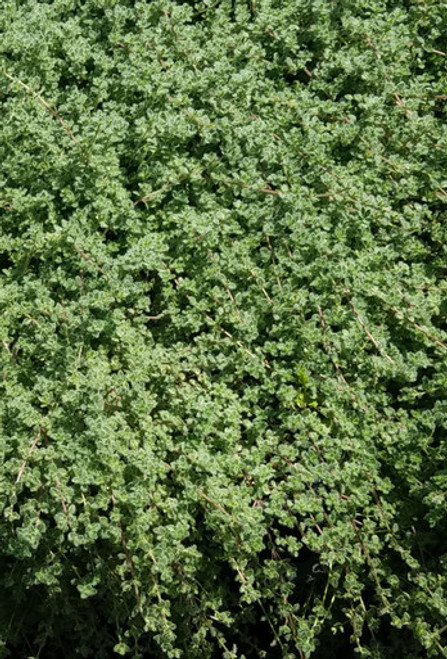
Habit & Size: Bush Violet forms a broad, spreading shrub typically reaching 2–3 feet tall and 4–5 feet wide. Its arching branches carry opposite pairs of soft, rounded sage-green leaves with finely hairy margins. During fall and early winter, clusters of violet-blue flowers develop near the branch tips, often covering much of the plant. Stems may root where they contact the soil, allowing mature plants to spread beyond their original footprint. In heavier shade, growth becomes more open and elongated, sometimes extending through surrounding vegetation.
Cultural Requirements: Barleria obtusa performs well in full sun to partial shade, with more abundant flowering generally occurring in brighter exposures. It adapts to coastal and mild inland Southern California landscapes and tolerates periods of drought once established. Occasional deep irrigation can improve foliage density and overall appearance, although plants generally require little supplemental water in established coastal plantings. Good drainage is preferred. The plant tolerates light frost, but colder weather may cause foliage discoloration or dieback. Pruning after the main flowering period encourages denser branching and helps control size.
Landscape Uses: Bush Violet is particularly useful where a broad, informal evergreen shrub is desired for seasonal color. Its spreading habit works well on banks, slopes, along retaining walls, and in mixed shrub borders. Mass plantings can create substantial fall and winter flower displays, while individual plants are useful in residential gardens, courtyards, and protected commercial landscapes. Allow sufficient room for lateral growth, especially where plants receive regular irrigation.
Identification Note: Barleria obtusa is distinguished by its soft, rounded leaves, spreading branch structure, and violet-blue flowers concentrated near the stem tips. Although commonly called Bush Violet, it is not related to true violets in the genus Viola. It belongs to the Acanthus family (Acanthaceae) and may also appear in older horticultural references under the name Barleria uitenagensis.
Pests and Cultural Considerations: Generally low maintenance and relatively trouble-free in suitable growing conditions. Its primary management consideration is its tendency to spread through branches that root on contact with moist soil. Occasional seedlings may also appear nearby. Regular irrigation can encourage more vigorous growth and increase the need for pruning. Light to moderate cutting back after flowering helps maintain a compact appearance. In colder inland locations, frost may cause temporary foliage damage, and plants may be slower to recover following severe freezes.
Frequently Asked Questions:
Is Barleria obtusa native to California? No. Bush Violet is native to eastern South Africa, where it occurs in subtropical hillsides, shrublands, and forest margins.
How large does Bush Violet grow? Plants generally reach 2–3 feet tall and 4–5 feet wide, although branches may spread farther when allowed to root along the ground.
When does Barleria obtusa bloom in Southern California? The heaviest flowering generally occurs during fall and early winter, with additional bloom possible during mild weather.
Does Bush Violet grow in full sun or shade? It performs well in full sun to partial shade. In deeper shade, plants may develop longer, more open branches and produce fewer flowers.
Is Bush Violet drought tolerant? Yes. Established plants tolerate periods of drought, particularly in coastal Southern California. Occasional supplemental irrigation can improve appearance during extended dry conditions.
Does Bush Violet attract pollinators? Yes. Its violet-blue flowers attract bees, butterflies, and nectar-feeding birds.
Is Barleria obtusa evergreen? Yes. It generally retains foliage throughout the year in mild Southern California climates, although frost can cause temporary discoloration or leaf loss.
Can Bush Violet be used on slopes? Yes. Its broad, spreading growth makes it useful for covering banks and slopes, particularly in informal or naturalistic landscape designs. It should not be relied upon as the sole erosion-control measure on unstable slopes.
Does Bush Violet spread aggressively? It can spread beyond its original planting area as branches root where they touch the soil. Some self-seeding may also occur. Periodic trimming helps keep plants within the desired area.
When should Bush Violet be pruned? Prune after the main flowering period, generally in late winter or early spring, to encourage denser growth and maintain the desired size.
Is Bush Violet frost tolerant? It can tolerate light frost and temperatures approaching 20–25°F, but colder conditions may damage foliage or stems. More protected locations are preferable in frost-prone inland areas.
Is Bush Violet appropriate for commercial landscapes? Yes, particularly in large borders, slopes, and mass plantings where its spreading habit can be accommodated. It is less suitable for narrow planting strips or tightly maintained formal hedges.
- Common Name:
- Bush Violet
- Mature Height:
- 2-3'
- Mature Spread:
- 4-5'
- Exposure:
- Sun/Shade
- Growth:
- Evergreen
- Flower Color:
- Blue
- Foliage Color:
- Green
- Flower Time:
- Winter - Spring