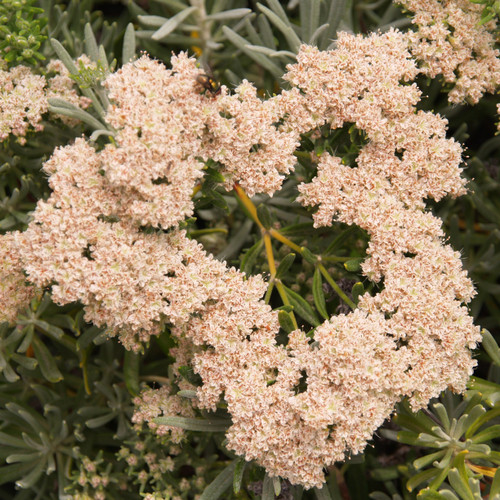
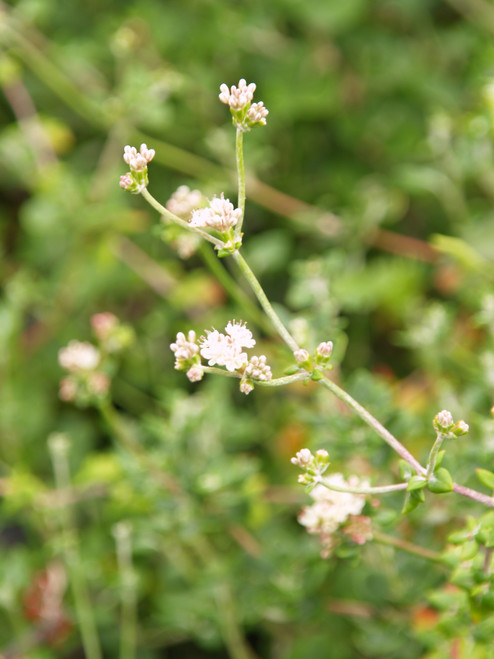
Eriogonum cinereum (Ashyleaf Buckwheat) is a California native evergreen shrub valued for its gray-green foliage, delicate flowers, and adaptability to dry landscapes. Found naturally in the Santa Monica Mountains and other coastal sage scrub communities, it combines the durability needed for restoration projects with a fine texture suited to ornamental gardens. Its modest size and long flowering season make it useful in native borders, butterfly gardens, and naturalistic slope plantings.
-
Botanical Name: Eriogonum cinereum
-
Common Names: Ashyleaf Buckwheat, Ashy-Leaf Buckwheat, Coastal Buckwheat
-
Plant Type: California Native Evergreen Shrub
-
Height: 2–3 ft
-
Spread: 2–5 ft; commonly 2–3 ft in landscape settings
-
Exposure: Full Sun to Part Sun
-
Water Needs: Very Low Once Established
-
Bloom Color: White, Sometimes Tinted Pale Pink
-
Bloom Season: Spring through Fall; Timing Varies with Location
-
Wildlife Value: Attracts Butterflies, Native Bees, and Other Pollinators
-
Origin: Coastal Southern and South-Central California, Including Santa Rosa Island
-
Soil Requirements: Adaptable; Well Drained Preferred
Habit & Size: Forms a low, branching shrub with an open, airy outline. Small, oval leaves have softly woolly surfaces that give the foliage its characteristic ash-gray to gray-green appearance. Plants typically reach 2–3 feet tall and wide, with mature specimens spreading to approximately 5 feet under favorable conditions.
Slender, branching flower stems carry small clusters of white to pale pink flowers above the foliage. Flowering can extend from spring into fall, with summer often a prominent bloom period. The clusters gradually turn rusty brown as they mature, adding contrast against the pale leaves.
Cultural Requirements: Plant in full sun to part sun with adequate drainage. Ashyleaf Buckwheat accommodates a range of soil textures, but avoid sites that remain saturated. Water new plants deeply enough to moisten the root ball and surrounding soil, allowing drainage between irrigations. Reduce watering as roots establish; mature plants can perform with little supplemental irrigation.
Although coastal in origin, this species can establish successfully in inland Southern California, including the San Gabriel and San Fernando Valleys. Fall through early spring planting gives roots time to develop before summer heat. Inland installations made during warmer weather require closer attention to moisture and exposure. Once established in a suitable site, plants can naturalize into a low-input landscape.
Landscape Uses: Useful in California native gardens, pollinator borders, dry slopes, habitat restoration, and revegetation projects. Its spreading habit makes it suitable for erosion-control plantings once established, while its relatively low stature allows placement toward the front of mixed shrub borders.
The gray foliage provides contrast beside green-leaved native sages, monkeyflowers, and California fuchsia. Combine plants with compatible exposure and irrigation needs, and allow room for the flowering stems rather than placing them directly against narrow walkways. Its loose form is particularly effective in informal groupings and naturalistic landscapes.
Identification Note: Distinguished by its small, broad, gray-green leaves and fine, branching flower stems. Unlike the narrow, often clustered leaves of California Buckwheat (Eriogonum fasciculatum), Ashyleaf Buckwheat has oval leaves with a visibly woolly appearance. Its smaller flower clusters create an airy effect rather than the broad, flattened flowering “platforms” associated with some other native buckwheats.
Pests and Cultural Considerations: Generally low maintenance and without significant pest problems when appropriately sited. Persistent soil moisture and unnecessary summer irrigation can undermine performance, particularly where drainage is poor.
Remove dead branches and lightly shape plants as needed to retain their natural branching structure. Avoid routine shearing, which removes flowering growth and diminishes the airy form that gives this species its ornamental value. In formal settings, plan for seasonal grooming rather than expecting a consistently clipped appearance.
Frequently Asked Questions:
Should the brown flower heads be removed?
Not necessarily. Mature seed heads can remain as a food source for seed-eating birds and provide seasonal texture. If a tidier appearance is preferred, remove them selectively after seed has matured, leaving some on plants in habitat-focused areas.
Does Ashyleaf Buckwheat support butterfly caterpillars as well as adult butterflies?
Yes. In addition to providing nectar, it is documented as a larval host for the square-spotted blue butterfly. This gives it a role in supporting butterfly reproduction, although use depends on which butterflies occur locally.
How cold hardy is Eriogonum cinereum?
Theodore Payne Foundation lists cold hardiness at approximately 25°F, while some nursery observations report tolerance of lower temperatures. For planting decisions, use approximately 25°F as a conservative reference and account for local frost exposure, plant maturity, and freeze duration.
- Common Name:
- Ashyleaf Buckwheat
- Mature Height:
- 2-3'
- Mature Spread:
- 2-5'
- Exposure:
- Sun/Part Sun
- Growth:
- Evergreen
- Flower Color:
- White
- Foliage Color:
- Grey
- Flower Time:
- Spring - Fall