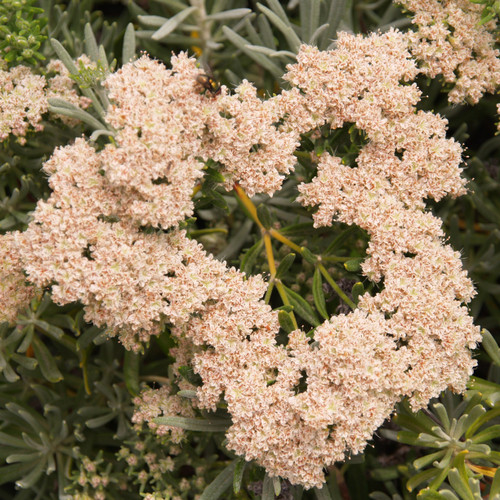
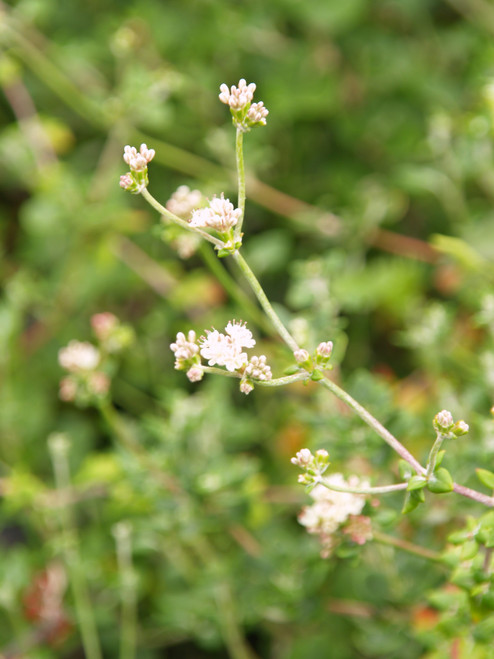
Eriogonum grande var. rubescens (Red Buckwheat, Red-Flowered Buckwheat) is a compact California native buckwheat endemic to the Channel Islands. It is grown for its rose to dark pink flower clusters, low spreading habit, silvery-gray to gray-green foliage, and strong value to native pollinators. Although commonly called Red Buckwheat, the flowers are typically rose, rosy pink, or dark pink rather than true red, and flower intensity may vary depending on plant origin, growing conditions, and season. This species is best suited to rock gardens, coastal landscapes, pollinator gardens, specialty residential plantings, and water-wise landscapes where drainage is excellent.
Quick Facts:
Botanical Name: Eriogonum grande var. rubescens
Common Name: Red Buckwheat, Red-Flowered Buckwheat
Plant Type: California native evergreen perennial
Mature Size: Approximately 1–2 feet tall and commonly 2–2½ feet wide in cultivated landscapes; may spread wider over time under favorable conditions
Exposure: Full sun to part sun
Water: Low once established
Soil: Excellent drainage required; best in sandy, rocky, decomposed granite, or other fast-draining soils
Bloom Season: Late spring through summer
Flower Color: Rose to dark pink, aging to rusty seed heads
Foliage Color: Silvery gray-green to gray-green
Wildlife Value: Attracts native bees, butterflies, and other beneficial pollinators
Origin: Channel Islands, California
California Native: Yes
Landscape Uses: Rock gardens, coastal landscapes, pollinator gardens, dry borders, native plant collections, slopes, and water-wise residential landscapes
Habit & Size: Red Buckwheat forms a dense, low-growing mound of evergreen foliage, typically reaching 1–2 feet tall. While capable of spreading wider over time, plants in cultivated landscapes more commonly mature around 2–2½ feet wide. Slender flowering stems rise above the foliage from late spring through summer, carrying rounded clusters of rose to dark pink flowers. As the flowers age, they develop rusty tones that provide additional seasonal interest after the main bloom period.
Cultural Requirements: Eriogonum grande var. rubescens performs best in full sun with excellent drainage. Along the Southern California coast, it generally performs well in full sun and mild conditions. In hotter inland climates, afternoon shade or protection from intense summer heat can improve longevity and appearance. Once established, it requires minimal supplemental irrigation and should not be overwatered, particularly during summer. Poor drainage and excessive irrigation are the most common causes of decline, especially in inland gardens or heavier soils.
Landscape Uses: Red Buckwheat is useful in rock gardens, coastal landscapes, pollinator gardens, dry borders, native plant collections, slopes, and water-wise residential landscapes. Its compact size and strong flower display make it especially useful in specialty gardens and smaller residential designs, where it can be placed among boulders, gravel, and other drought-tolerant California natives. It is generally less suited to large-scale commercial landscapes than tougher, longer-lived buckwheat species because it has more specific drainage requirements and may be relatively short lived under standard commercial maintenance practices.
Identification Note: Eriogonum grande var. rubescens is distinguished by its compact, mat-forming habit, silvery-gray to gray-green evergreen foliage, and rounded flower clusters ranging from rose to dark pink. The flowers mature to rusty seed heads that extend seasonal interest beyond the main bloom period. Despite the common name Red Buckwheat, the flowers are rarely true red.
Pests and Cultural Considerations: Red Buckwheat is generally free of significant insect and disease problems when grown in well-drained soils with appropriate irrigation. Root and crown problems can develop where soils remain wet or plants receive excessive summer irrigation. Plants may become woody, sparse, or decline after several years, particularly in hotter inland sites or heavier soils. Removing spent flower stalks and lightly pruning after flowering can help maintain a cleaner appearance, but avoid cutting heavily into older woody stems.
Frequently Asked Questions:
Is Eriogonum grande var. rubescens native to California? Yes. Red Buckwheat is native to California’s Channel Islands, where it occurs in well-drained coastal and island habitats.
Why is it called Red Buckwheat if the flowers are not always red? The flowers are usually rose, rosy pink, or dark pink rather than true red. Flower color can vary depending on the origin of the plant material, growing conditions, and season.
Is Red Buckwheat drought tolerant? Yes. Once established, Red Buckwheat is drought tolerant and performs well with minimal supplemental irrigation when planted in well-drained soil.
Does Red Buckwheat attract pollinators? Yes. The flowers attract native bees, butterflies, and other beneficial pollinators, making it useful in pollinator-focused California native landscapes.
Can Red Buckwheat be grown inland? Yes, but it generally performs best in coastal or mild conditions. In hotter inland areas, afternoon shade, excellent drainage, and careful irrigation management can improve plant health and longevity.
Is Red Buckwheat suitable for large-scale commercial landscapes? Usually only in select applications. Red Buckwheat is better suited to residential gardens, rock gardens, coastal landscapes, and specialty native plantings where its compact habit and flower display can be appreciated and where irrigation and drainage can be managed carefully.
What is the best soil for Red Buckwheat? Fast-draining soil is best. Sandy, rocky, decomposed granite, or raised planting conditions are preferred. Avoid heavy soils that remain wet.
Should Red Buckwheat be pruned? Light pruning after flowering can improve appearance and remove spent flower stalks. Avoid severe pruning into older woody growth.
- Common Name:
- Red Buckwheat
- Mature Height:
- 1-2'
- Mature Spread:
- 2-3'
- Exposure:
- Sun/Part Sun
- Growth:
- Evergreen
- Flower Color:
- Dark Pink