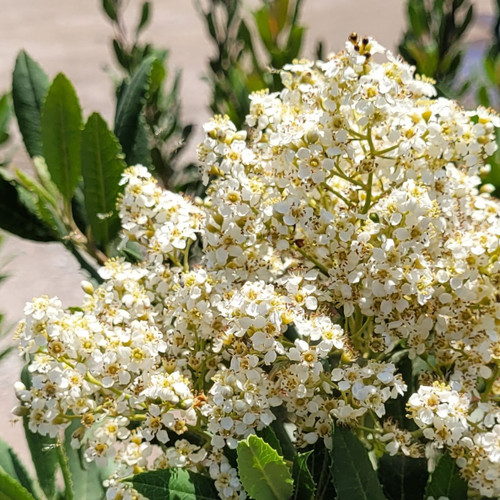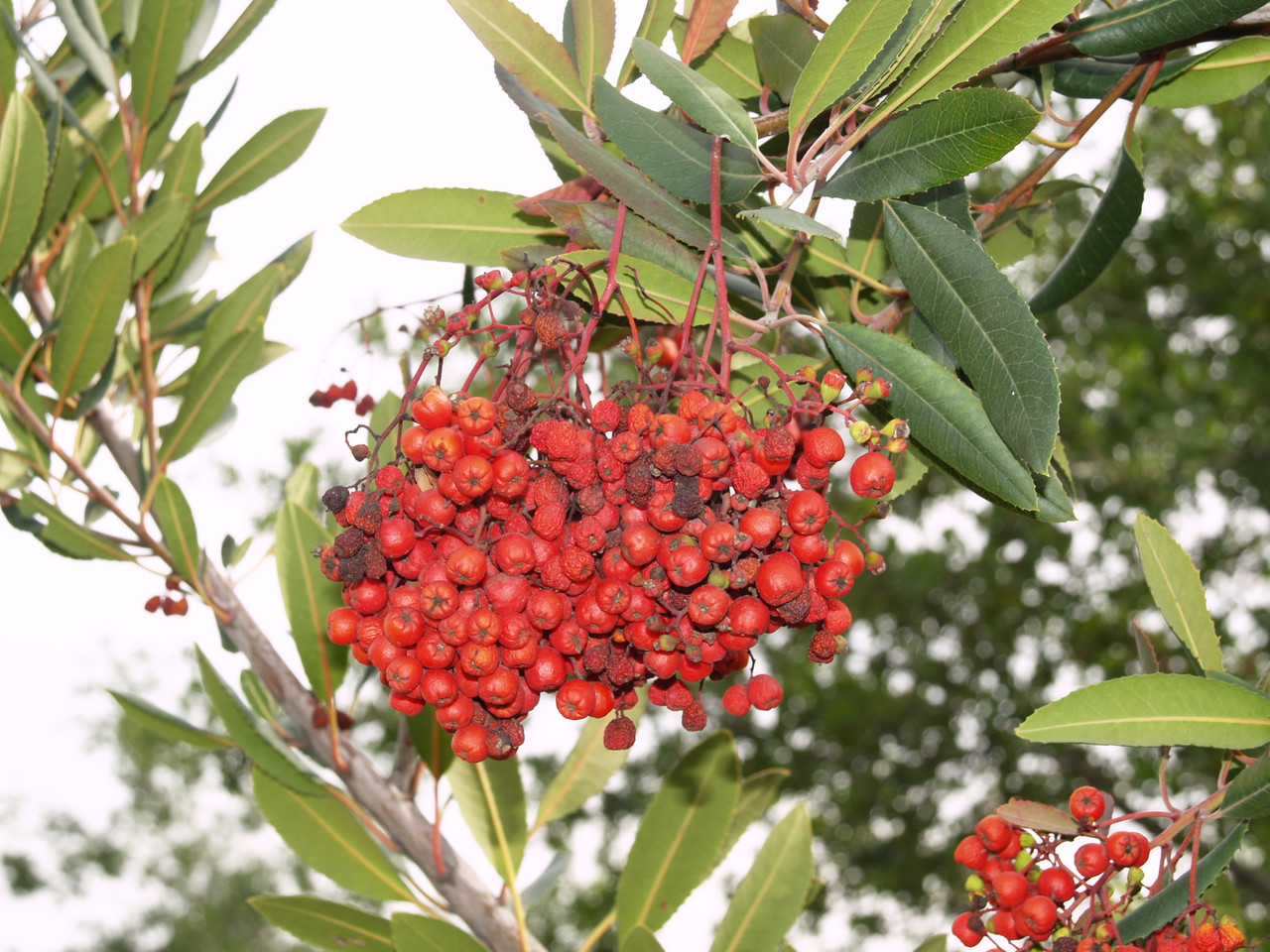
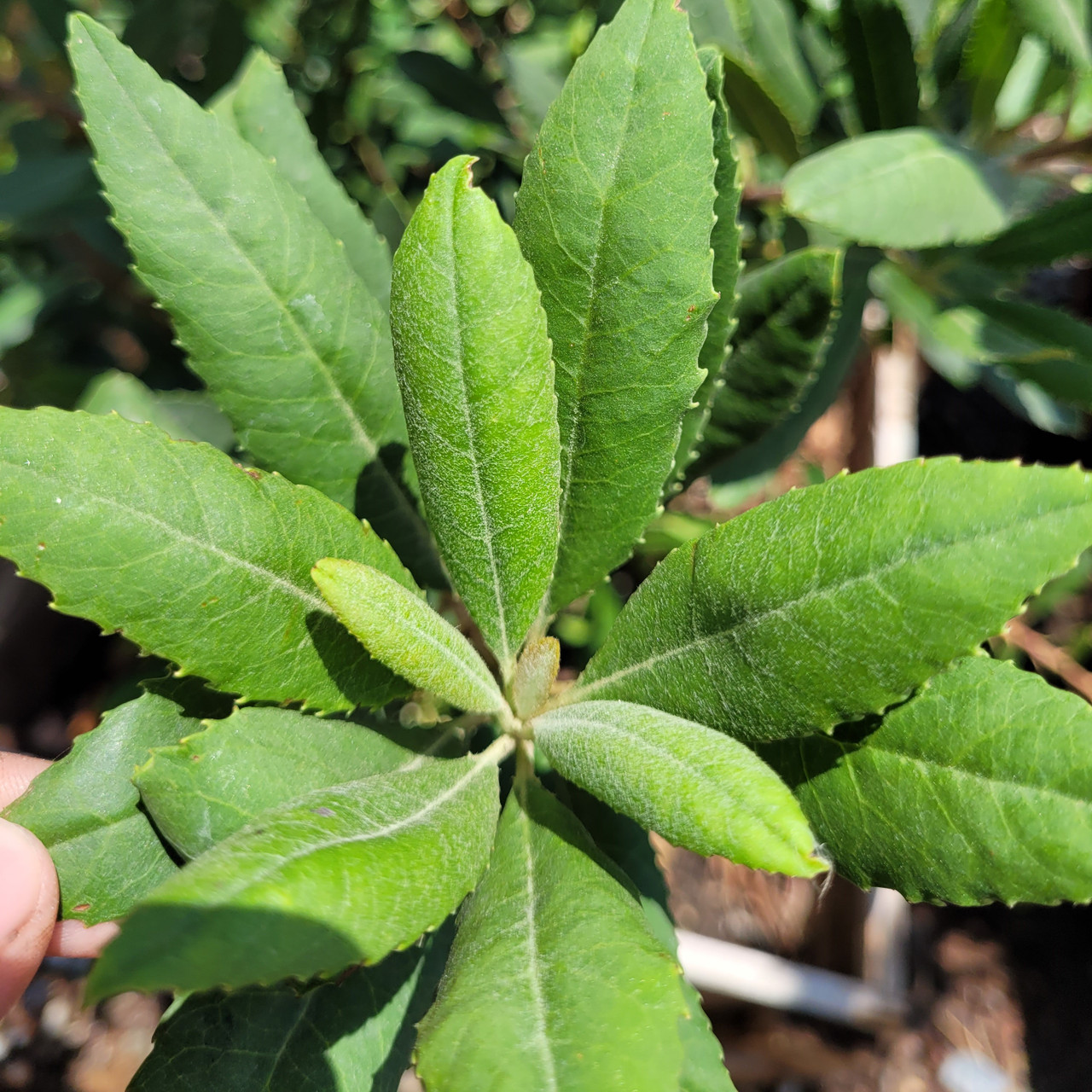
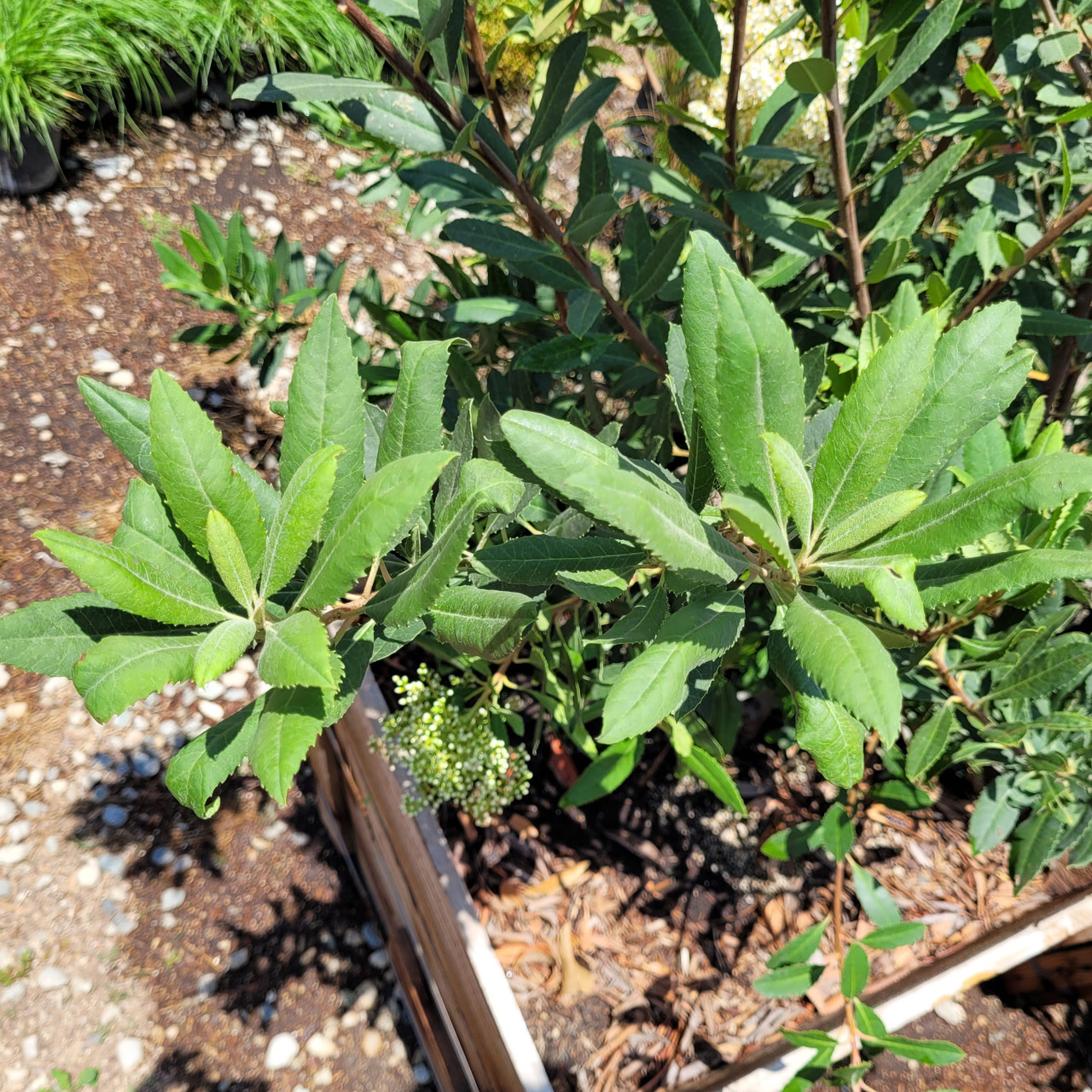
Heteromeles arbutifolia (Toyon, California Holly) is an iconic California native evergreen shrub or small tree valued for its large, leathery, saw-toothed green leaves, clusters of creamy white flowers, and heavy displays of bright red fruit in fall and winter. Commonly found throughout much of California outside high-elevation mountain and desert communities, Toyon provides year-round structure and seasonal interest while supporting birds, bees, and other wildlife. It naturally develops into a large shrub 15–20 feet tall but can be maintained at a smaller size or selectively trained into an attractive multi-trunked tree. Its dense evergreen foliage makes it especially useful as an informal hedge, privacy screen, background plant, or specimen, while its substantial root system contributes to erosion control and slope stabilization.
Quick Facts:
Botanical Name: Heteromeles arbutifolia
Common Name: Toyon, California Holly
Plant Type: California native evergreen shrub or small tree
Mature Size: Approximately 8–20 feet tall and 10–20 feet wide
Exposure: Full sun to part shade; foliage generally becomes denser with greater sun exposure
Water: Occasional to regular irrigation with adequate drainage; established plants are drought tolerant but may perform better with occasional deep watering
Soil: Adaptable to a variety of soil types; requires adequate drainage
Bloom Season: Late spring through summer
Flower Color: Creamy white, followed by bright red fruit
Fruit Season: Fall through winter
Foliage Color: Green
Seasonality: Evergreen
Growth Rate: Moderate
Growth Habit: Large, dense, upright shrub or multi-trunked small tree
Wildlife Value: Flowers attract bees and other pollinators; winter fruit provides food for birds and other wildlife
California Native: Yes
Native Range: Commonly found throughout much of California outside high mountain and desert communities
Landscape Uses: Informal hedges, privacy screens, specimen shrubs and trees, habitat and bird gardens, California native landscapes, woodland plantings, background plantings, banks, slopes, erosion-control projects, and residential or commercial landscapes
Habit & Size: Toyon naturally develops into a large, upright shrub reaching approximately 15–20 feet tall and nearly as wide under favorable conditions. Its dense branching and large, leathery, finely saw-toothed foliage provide year-round structure and screening. Plants can be kept smaller through periodic selective pruning. Gradual removal of lower branches can also reveal the main stems and develop an attractive multi-trunked tree form, although continued maintenance may be necessary because pruning can stimulate new shoots from the base.
Broad clusters of creamy white flowers appear in late spring and summer. These are followed by heavy clusters of green fruit that ripen to brilliant red during fall and winter. The combination of evergreen foliage, summer flowers, and winter fruit gives Toyon ornamental value throughout the year.
Cultural Requirements: Heteromeles arbutifolia performs well in full sun to part shade and adapts to a range of soil types where drainage is adequate. Plants grown with greater sun exposure generally develop denser foliage and produce more flowers and fruit. Toyon tolerates part shade, although plants may become more open and produce fewer berries under heavily shaded conditions.
Provide occasional to regular irrigation while plants establish their root systems. Established plants are drought tolerant but often maintain a fuller appearance and produce more abundant fruit with occasional deep irrigation, especially in hot inland landscapes. Toyon can also tolerate regular garden irrigation if the soil drains well. Avoid prolonged saturation, standing water, and frequent shallow watering.
Landscape Uses: Toyon is an excellent choice for California native gardens, bird and habitat gardens, woodland and chaparral-inspired landscapes, informal hedges, privacy screens, background plantings, banks, slopes, and restoration projects. Its dense evergreen foliage provides year-round screening and structure, while its creamy white flowers and abundant red winter fruit contribute seasonal color and wildlife value.
For landscape designers, Toyon can serve as a substantial evergreen anchor within mixed native plantings. Its dense foliage provides an effective background for lower-growing perennials, grasses, and flowering shrubs. It can be combined with native oaks, manzanitas, coffeeberry, ceanothus, California sagebrush, sages, buckwheats, and other plants with compatible exposure, soil, and irrigation requirements.
Toyon is also useful in residential and commercial landscapes where a durable native screen, large shrub, or small specimen tree is required. Its substantial root system makes it a valuable component of erosion-control and slope-stabilization plantings. On difficult sites, it should be combined with plants possessing different root depths and growth habits rather than relied upon as the only means of stabilization.
Its mature height and width should be considered carefully during placement. Toyon is better suited to informal hedges and screens than to tightly clipped geometric forms, and providing adequate space allows the plant to develop its natural shape without frequent pruning.
Identification Note: Heteromeles arbutifolia is recognized by its large, leathery, glossy green leaves with finely saw-toothed margins, broad clusters of creamy white flowers, and heavy clusters of bright red fruit that mature during fall and winter. Its holly-like foliage and red winter fruit gave rise to the common name California Holly, although Toyon is not a true holly and belongs to the rose family rather than the genus Ilex.
Toyon historically grew throughout the hills surrounding Hollywood, leading to the popular belief that the community was named for the plant’s holly-like foliage and red fruit. Although this story remains widely repeated, historical evidence indicates that the name Hollywood originated elsewhere and was not directly derived from Toyon.
The cultivated selection Heteromeles arbutifolia ‘Davis Gold’ produces clusters of bright golden-yellow fruit instead of the red fruit typical of the species. We also grow this selection for landscapes where a different winter fruit color is desired.
Pests and Cultural Considerations: Toyon is generally durable and low maintenance when grown under suitable conditions, but it can be susceptible to fire blight and may occasionally experience leaf spot, scale insects, lace bugs, thrips, whiteflies, or other pests. Appropriate irrigation, adequate drainage, and good air circulation help reduce plant stress and disease problems.
Toyon flowers and fruits on older growth, so heavy or poorly timed pruning may reduce the following fruit display. If preserving its red winter fruit is important, prune after the fruit has been eaten or has fallen. Use selective thinning and structural cuts rather than frequent shearing or severe coppicing. When training Toyon into a multi-trunked tree, remove lower branches gradually and retain enough foliage to support healthy growth.
Toyon fruit contains naturally occurring cyanogenic compounds. Unripe fruit and the seeds should not be consumed, and large quantities of raw fruit may be harmful to humans. For landscape purposes, Toyon should not be treated as a conventional edible plant. Fallen fruit may also create temporary litter beneath heavily fruiting specimens, which should be considered near paving, entrances, pools, and heavily used pedestrian areas.
Frequently Asked Questions:
Can Toyon be trained into a multi-trunked tree? Yes. Although Toyon naturally grows as a large shrub, selective removal of lower branches can gradually develop an attractive multi-trunked tree. Continued pruning may be required because the plant can produce new shoots from its base.
Why is my Toyon not producing many red berries? Heavy shade, plant age, insufficient pollination, drought stress, or pruning that removes flowering wood can reduce fruit production. Plants generally flower and fruit more heavily with greater sun exposure and appropriate irrigation.
What is ‘Davis Gold’ Toyon? Heteromeles arbutifolia ‘Davis Gold’ is a cultivated selection that produces clusters of bright golden-yellow fruit rather than the red fruit typical of the species. It otherwise offers similar evergreen foliage and landscape value.
- Common Name:
- Toyon
- Mature Height:
- 8-20'
- Mature Spread:
- 10-20'
- Exposure:
- Sun
- Growth:
- Evergreen
- Flower Color:
- White w/Red Berry
- Foliage Color:
- Green