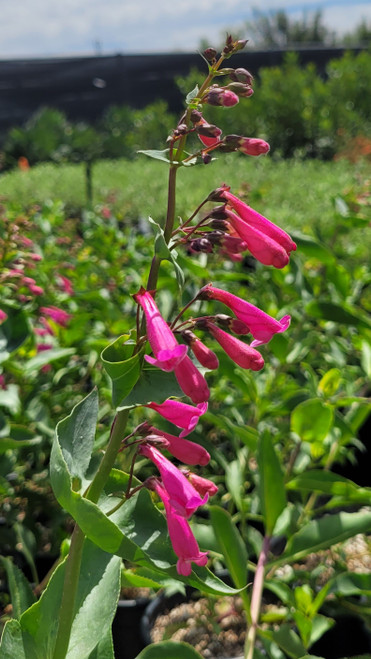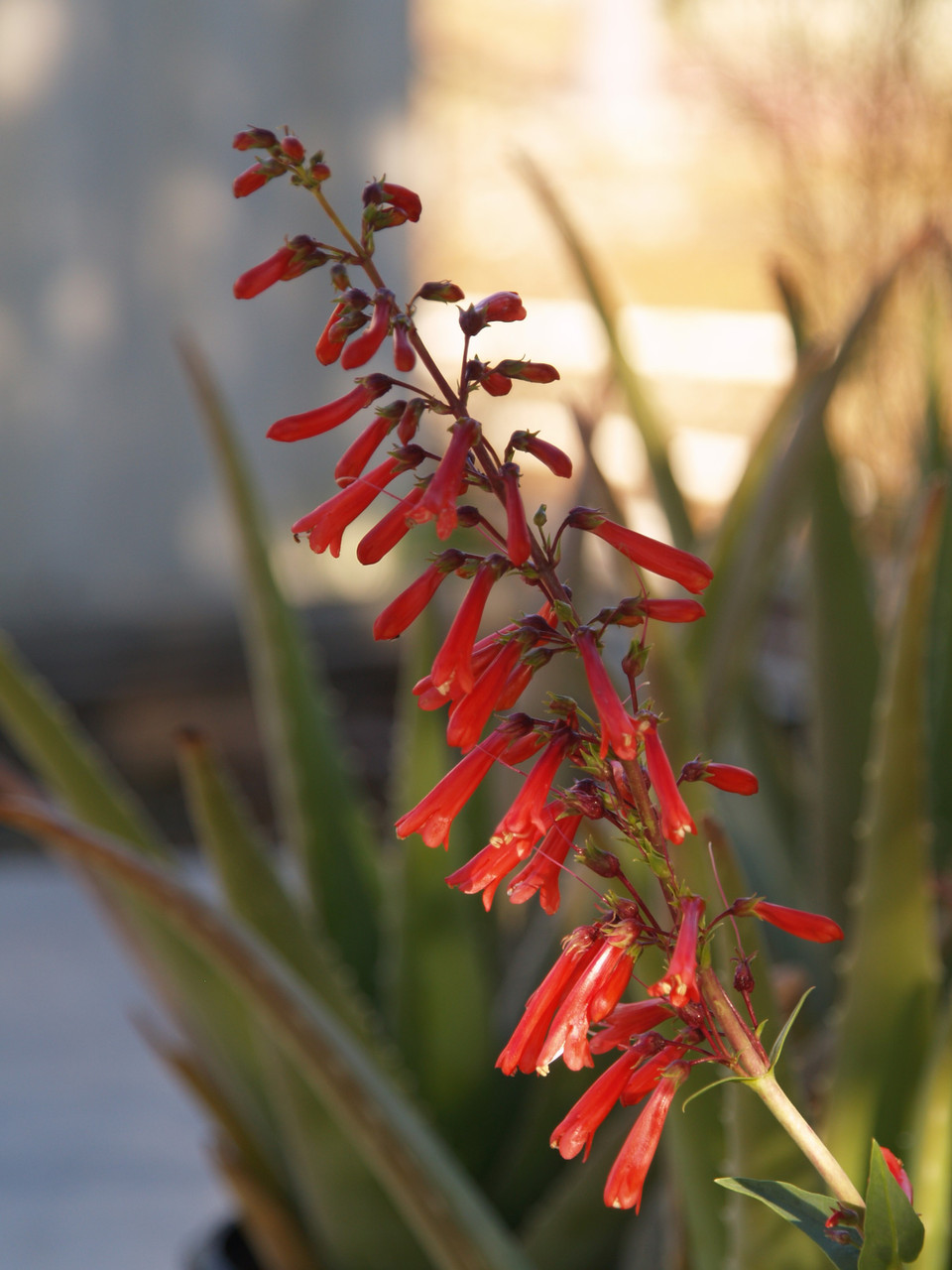


Penstemon eatonii (Firecracker Penstemon) is an evergreen perennial native to the western United States, including the high deserts of Southern California. Compact mounds of cupped, lance-shaped blue-green foliage produce tall spikes of brilliant scarlet-red tubular flowers in spring and summer. These nectar-rich blooms are magnets for hummingbirds and butterflies and may also attract native bees and other beneficial pollinators. Reaching approximately 1–2 feet tall and wide, Firecracker Penstemon brings vivid color to hot, dry, sunny locations without requiring much space. It is especially effective in desert gardens, rock gardens, California native landscapes, and other water-wise plantings.
Quick Facts:
Botanical Name: Penstemon eatonii
Common Name: Firecracker Penstemon
Plant Type: Evergreen native perennial
Mature Size: Approximately 1–2 feet tall and 1–2 feet wide
Exposure: Full sun to part sun
Water: Infrequent to occasional summer water once established
Soil: Lean, well-drained soil; avoid heavy organic amendments
Bloom Season: Spring, with flowering extending into summer
Flower Color: Scarlet red
Foliage Color: Blue-green
Seasonality: Evergreen
Wildlife Value: Flowers attract hummingbirds, butterflies, native bees, and other beneficial pollinators
Growth Rate: Moderate
Habit/Form: Compact and clumping, with upright flower spikes
Origin: Western United States, including the high deserts of Southern California
California Native: Yes
Landscape Uses: Desert gardens, rock gardens, California native landscapes, hummingbird and butterfly gardens, pollinator gardens, dry borders, slopes, raised beds, pathways, small gardens, and water-wise plantings
Special Notes: Best established during the cooler months from October through March; avoid over-fertilization, excessive organic matter, and poorly drained soil
Habit & Size: Firecracker Penstemon forms small, compact mounds of cupped, lance-shaped blue-green leaves. Mature plants typically reach 1–2 feet tall and spread 1–2 feet wide. Upright stalks carry clusters of tubular scarlet-red flowers above the low foliage, producing a bold display without overwhelming nearby plants. Its modest size makes it useful in small residential gardens, narrow planting areas, and spaces between rocks or boulders.
Cultural Requirements: Penstemon eatonii performs best in full sun to part sun and requires excellent drainage. Once established, it needs only infrequent to occasional summer irrigation. Lean soil is preferable; over-fertilization and large amounts of organic matter should be avoided because overly rich conditions can promote weak growth and shorten the plant’s lifespan. Planting from October through March allows the roots to become established during cooler weather before summer heat arrives.
Landscape Uses: Firecracker Penstemon is an excellent choice for hot, dry, sunny areas in desert and rock gardens. Its scarlet flowers provide a striking accent in California native landscapes, pollinator gardens, hummingbird gardens, dry borders, slopes, and water-wise plantings. The compact habit also works well beside pathways, in raised beds, among boulders, and in gardens where space is limited. For a cohesive planting, combine it with drought-tolerant western native plants that prefer similar exposure, drainage, and irrigation.
Identification Note: Penstemon eatonii is recognized by its compact mound of cupped, lance-shaped blue-green foliage and its upright spikes of brilliant scarlet-red tubular flowers. The intense flower color, vertical floral display, and low-growing foliage make Firecracker Penstemon one of the most recognizable native penstemons of the American West.
Pests and Cultural Considerations: Firecracker Penstemon generally has few serious pest or disease problems when planted in well-drained soil. Excessive irrigation and poor drainage are the most common causes of decline. Rich soil, heavy organic amendments, and excessive fertilizer can encourage weak, overly lush growth. Spent flower stalks may be removed after blooming to maintain a tidy appearance, and favorable conditions may occasionally support additional flowering.
Frequently Asked Questions:
Will Firecracker Penstemon remain evergreen in every climate? Its foliage is generally evergreen in suitable climates, including many Southern California landscapes. Appearance may vary with elevation, winter cold, drought, and other local conditions.
Why can Firecracker Penstemon be short-lived in cultivated gardens? The most common problems are excessive summer irrigation, poor drainage, rich soil, and heavy fertilization. Matching the plant with lean soil, low summer water, and compatible neighboring plants can improve its garden performance.
Is Firecracker Penstemon appropriate for ecological restoration? The species is native to parts of the western United States, but restoration projects should use plant material appropriate to the site’s location, habitat, and local genetic population. Nursery-grown Firecracker Penstemon is well suited to native-inspired and habitat gardens, while formal restoration work may require locally sourced material.
How can Firecracker Penstemon be used most effectively in a planting design? Its vivid red flowers work well as seasonal accents among rocks, muted foliage, and lower-growing plants. Repeating several plants through a dry border or rock garden can create a stronger visual effect while preserving the natural character of the planting.
- Common Name:
- Firecracker Penstemon
- Mature Height:
- 1-2'
- Mature Spread:
- 1-2'
- Exposure:
- Sun/Part Sun
- Growth:
- Evergreen
- Flower Color:
- Red
- Soil:
- Well drained best
- Foliage Color:
- Blue Green
- Flower Time:
- Spring