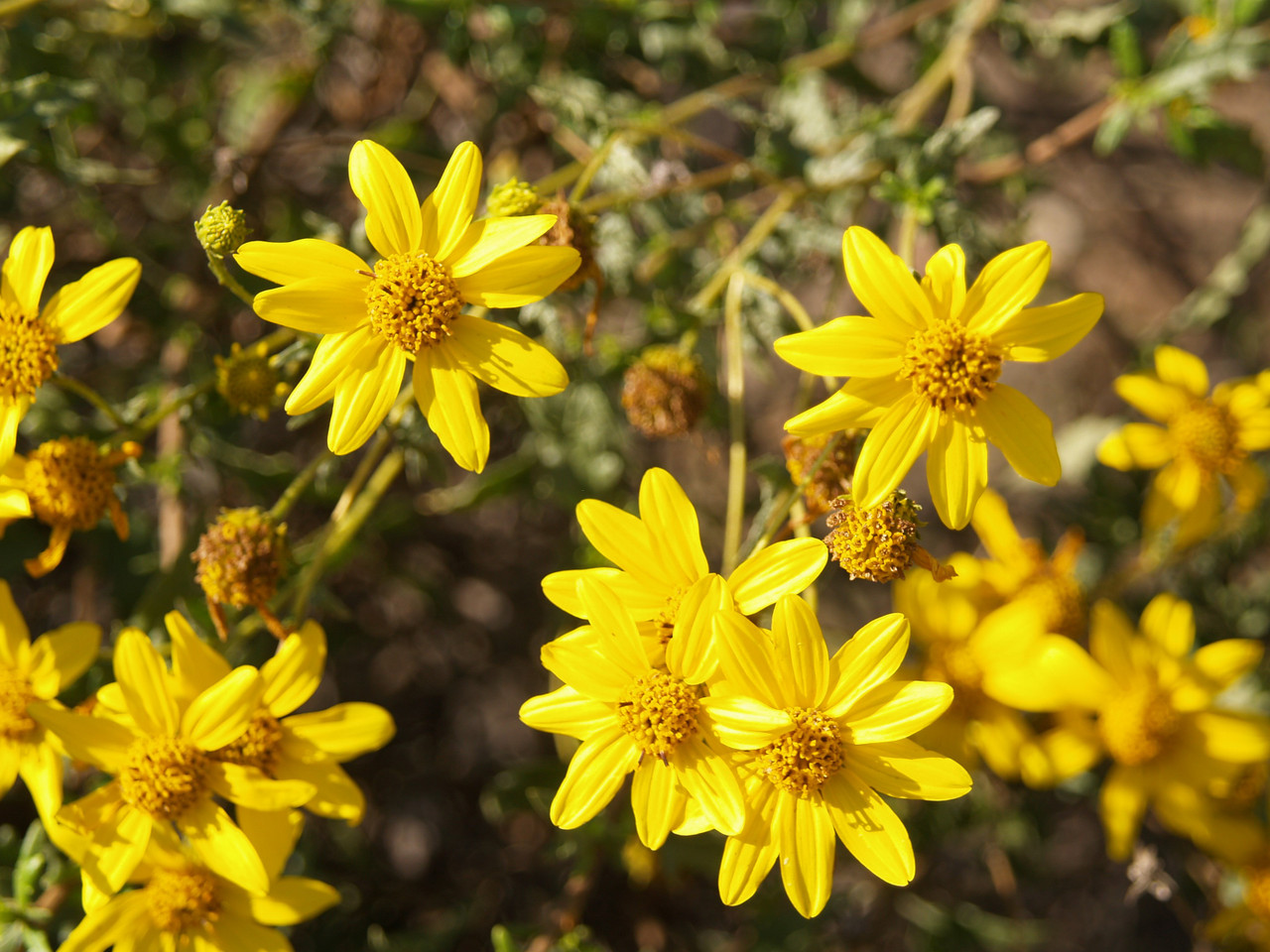


Viguiera laciniata (Bahiopsis laciniata) (San Diego Sunflower, California Bush Sunflower) is an evergreen perennial subshrub native to coastal sage scrub and chaparral communities of Southern California and northwestern Baja California. Formerly classified within the genus Viguiera, it is now treated botanically as Bahiopsis laciniata, though the name Viguiera laciniata remains widely used in the nursery trade and horticultural references. It is grown for its bright yellow flowers, gray-green evergreen foliage, low water needs, and usefulness in California native landscapes, habitat restoration projects, and water-wise plantings.
Quick Facts:
Botanical Name: Viguiera laciniata (Bahiopsis laciniata)
Common Name: San Diego Sunflower, California Bush Sunflower
Plant Type: California native evergreen subshrub
Mature Size: Approximately 1–2 feet tall and 1–3 feet wide
Exposure: Full sun
Water: Low; deep but infrequent irrigation once established
Soil: Well-drained sandy, rocky, decomposed granite, and other well-drained native soils; tolerant of low-fertility soils
Bloom Season: Spring through early summer, with occasional rebloom when supplemental moisture is available
Flower Color: Bright yellow
Foliage Color: Green
Wildlife Value: Supports native bees, butterflies, and other pollinating insects
Origin: Southern California and northwestern Baja California
Deer Resistance: Generally deer resistant
Landscape Uses: California native gardens, habitat restoration, coastal sage scrub plantings, slopes, banks, commercial landscapes, residential water-wise plantings, and low-water landscapes
Habit & Size: Forms a rounded, mounding evergreen subshrub approximately 1–2 feet tall and 1–3 feet wide. Deeply divided gray-green foliage provides year-round texture and contrasts with bright yellow daisy-like flowers produced above the foliage in spring. Plants may continue producing scattered flowers into summer or fall with occasional supplemental irrigation. The flowers provide nectar and pollen for native bees, butterflies, and other pollinating insects. The gray-green foliage is lightly aromatic when crushed.
Cultural Requirements: Provide full sun and well-drained soil for best performance. Once established, this species requires little supplemental irrigation and is well adapted to Southern California’s Mediterranean climate. Deep but infrequent watering during prolonged drought can improve appearance while maintaining drought tolerance. Plants develop their best form in lean, well-drained soils. Rich soils or frequent summer irrigation may produce faster growth but can reduce longevity and create a looser growth habit. It performs well in both coastal and inland Southern California where drainage is good. Avoid poorly drained soils and excessive summer irrigation.
Landscape Uses: San Diego Sunflower is well suited for California native landscapes, habitat restoration projects, slopes, banks, commercial landscapes, residential water-wise plantings, and coastal sage scrub-inspired designs. Its naturally rounded habit makes it useful as an accent shrub, mass planting, or low flowering subshrub. It combines well with California buckwheats (Eriogonum spp.), California sagebrush (Artemisia californica), monkeyflowers (Diplacus spp.), California lilacs (Ceanothus spp.), native salvias, and other drought-adapted California native plants. Its root system also contributes to soil stabilization on slopes and banks.
Identification Note: This species is recognized by its deeply divided gray-green leaves, evergreen shrubby habit, and bright yellow daisy-like flower heads. It differs from many annual sunflowers by its woody perennial growth and finely dissected foliage. Although currently classified botanically as Bahiopsis laciniata, it continues to be widely grown, sold, and referenced as Viguiera laciniata throughout the nursery industry. Both botanical names remain common in nursery catalogs and horticultural references.
Pests and Cultural Considerations: San Diego Sunflower is generally free of significant pest and disease problems in Southern California. Excessive irrigation and poorly drained soils are the most common causes of decline. Plants may become open or woody with age if not lightly pruned after flowering. Light pruning following bloom encourages a denser habit and fresh new growth. Avoid severe pruning into older woody stems, as recovery may be slow.
Frequently Asked Questions:
Is Viguiera laciniata native to California? Yes. Viguiera laciniata is native to Southern California and extends into northwestern Baja California.
Is San Diego Sunflower evergreen? Yes. It is an evergreen subshrub that retains its gray-green foliage throughout the year under normal Southern California growing conditions.
Is Viguiera laciniata drought tolerant? Yes. Once established, it performs well with very little supplemental irrigation and is well suited to water-wise landscapes.
Does San Diego Sunflower attract pollinators? Yes. Its flowers provide nectar and pollen for native bees, butterflies, and many other beneficial pollinating insects.
Can San Diego Sunflower grow near the coast? Yes. It performs well in both coastal and inland Southern California where soils are well drained.
How large does San Diego Sunflower grow? Most plants mature at approximately 1–2 feet tall and 1–3 feet wide, although mature size can vary somewhat depending on irrigation, soil conditions, and pruning practices.
Is San Diego Sunflower appropriate for California native landscapes? Yes. It is widely used in California native gardens, habitat restoration projects, coastal sage scrub plantings, slopes, banks, and water-wise landscape designs throughout Southern California.
Why is it sometimes called Bahiopsis laciniata? The species was formerly classified in the genus Viguiera. Modern botanical treatment places it in the genus Bahiopsis, although Viguiera laciniata remains widely used throughout the nursery trade and horticultural literature.
Should San Diego Sunflower be pruned? Light pruning after bloom can help maintain a denser habit and encourage fresh growth. Avoid severe pruning into older woody stems, as recovery may be slow or cause mortality.
- Common Name:
- San Diego Sunflower
- Mature Height:
- 1-2'
- Mature Spread:
- 1-3'
- Exposure:
- Sun
- Growth:
- Evergreen
- Flower Color:
- Golden
- Soil:
- Well drained best
- Foliage Color:
- Green
- Flower Time:
- Spring - Summer