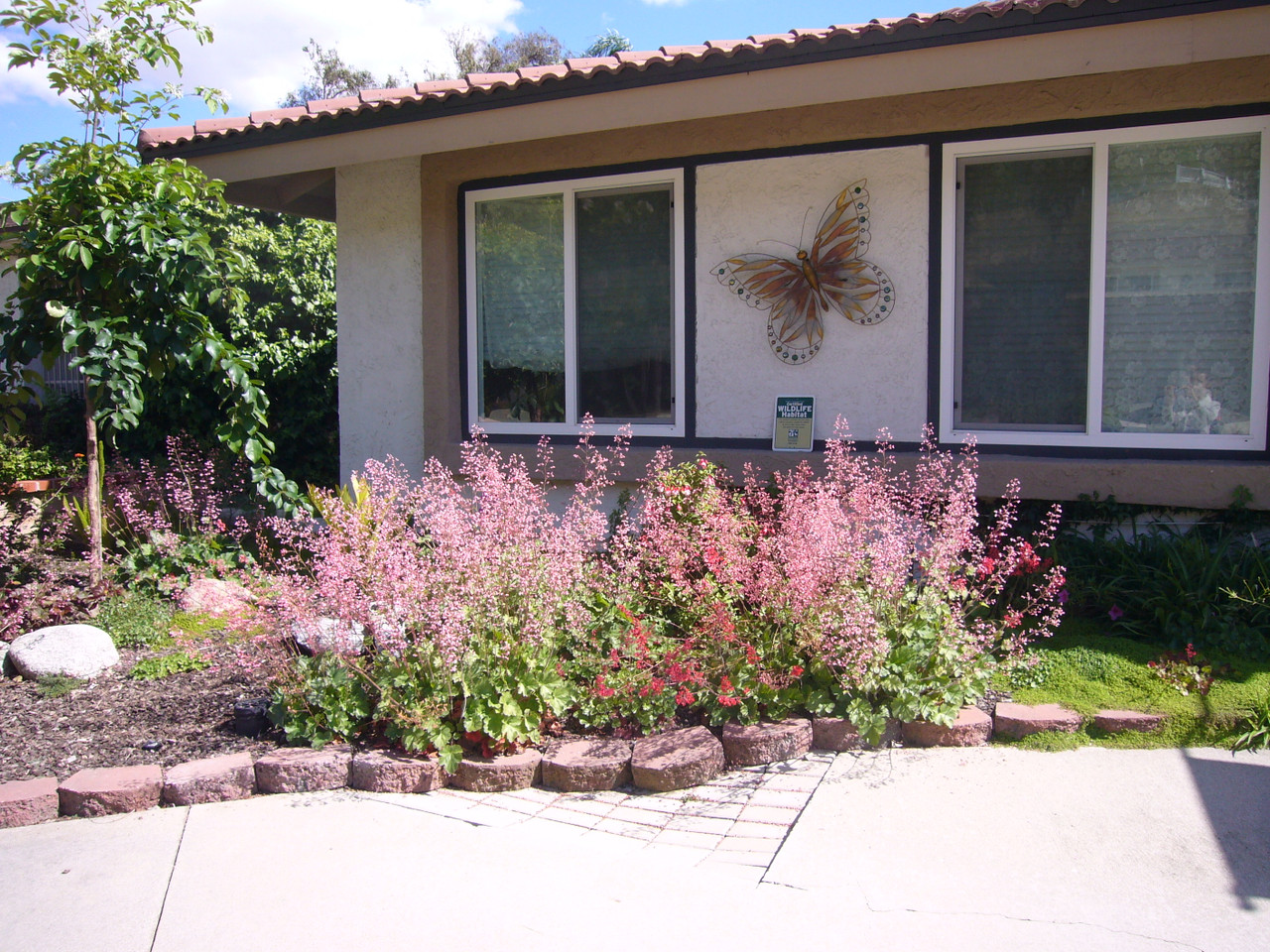
Heuchera ‘Wendy’ (Wendy Coral Bells) is a free-flowering evergreen perennial prized for its scalloped deep-green foliage, abundant light-pink spring flowers, and performance in dry shade. A hybrid of Heuchera sanguinea and the California native Heuchera maxima, it forms compact foliage mounds approximately 12–18 inches tall and 1–2 feet wide. In spring, the plant blooms profusely, producing light-pink flowers on slender spikes that rise 1–2 feet above the foliage. Once hummingbirds discover the flowers, they visit them in remarkable numbers. Particularly striking when planted in large masses, ‘Wendy’ is an excellent choice beneath mature oak trees and in other shaded locations where many flowering perennials struggle.
Quick Facts:
Botanical Name: Heuchera ‘Wendy’
Common Name: Wendy Coral Bells
Plant Type: Evergreen perennial and California native-derived hybrid
Mature Height: 12–18 inches
Mature Spread: 1–2 feet
Exposure: Part Sun/Shade
Water: Low to moderate; provide deep, infrequent irrigation and avoid excessive summer water
Soil: Well-drained soil that does not remain wet
Bloom Season: Spring
Flower Color: Light Pink
Foliage Color: Deep green
Growth: Evergreen
Wildlife Value: Flowers attract hummingbirds in high numbers once discovered
Growth Rate: Moderate
Habit/Form: Small, compact, clumping, and mounding, with upright flower spikes
Winter Hardiness: Reported by San Marcos Growers as hardy to approximately 10°F
Origin: A 1953 hybrid of Heuchera maxima and Heuchera sanguinea from the breeding program of Dr. Lee Lenz at Rancho Santa Ana Botanic Garden, now California Botanic Garden
Introduction: Selected by John Farmer Bowers of Skylark Nursery and named and introduced by John Dourley in 1984
California Native: California native-derived hybrid rather than a naturally occurring native species
Landscape Uses: Dry shade gardens, woodland gardens, shaded borders, oak-compatible landscapes, native companion gardens, shaded slopes, mass plantings, small gardens, and protected areas beneath compatible mature trees
Special Notes: Particularly free flowering and reported to have the largest leaves among its related hybrid series; relatively short-lived and may benefit from replacement after approximately three to five years
Habit & Size: ‘Wendy’ forms small, compact mounds of scalloped deep-green foliage that provide year-round texture. The leaves are palmately lobed, slightly hairy, and held in relatively loose rosettes. The foliage generally reaches 12–18 inches tall and spreads 1–2 feet wide. In spring, the plant blooms profusely, sending up numerous 1- to 2-foot-tall flower spikes covered with light-pink blossoms. The airy flowers add height above the foliage and create an especially impressive display when several plants are grouped in large drifts.
Cultural Requirements: Heuchera ‘Wendy’ performs in part sun to shade but requires full shade under most conditions. In milder coastal climates, it can grow successfully in filtered shade. Provide well-drained soil and deep, infrequent irrigation. Newly installed plants need sufficient moisture to establish their roots, but established plants can struggle when given too much water during the summer. Its Heuchera maxima parent contributes greater tolerance of dry shade, but the plant should not be allowed to become severely dry during establishment. Avoid frequent irrigation and soil that remains continuously wet.
Landscape Uses: Wendy Coral Bells is valuable for bringing evergreen texture and light-pink spring color to dry shade landscapes. It is an excellent choice beneath mature oak trees, in woodland gardens, along shaded borders, on protected slopes, and in other locations where many flowering perennials are difficult to grow. When planted beneath mature oaks, installation should avoid damaging major roots or introducing excessive summer moisture near the trunk. ‘Wendy’ is particularly striking in large masses, where its numerous flower spikes create a unified seasonal display and attract frequent hummingbird activity.
Identification Note: ‘Wendy’ is recognized by its small mounds of scalloped, slightly hairy deep-green foliage and its profusion of light-pink spring flowers held on slender spikes above the leaves. Its parentage combines Heuchera sanguinea, which contributes larger, more colorful flowers, with the California native Heuchera maxima, which contributes larger stature, taller inflorescences, and greater drought tolerance. San Marcos Growers identifies ‘Wendy’ as particularly free flowering and as having the largest leaves among the related hybrids developed through the same breeding program.
History and Introduction: ‘Wendy’ originated from a 1953 cross between Island Alum Root, Heuchera maxima, and the southwestern native Heuchera sanguinea made by Dr. Lee Lenz at Rancho Santa Ana Botanic Garden, now California Botanic Garden. John Farmer Bowers of Skylark Nursery later selected the cultivar. John Dourley, the botanic garden’s director of horticulture, named and introduced it in 1984. According to San Marcos Growers, the name “Wendy” was spontaneous and did not refer to a particular person.
Pests and Cultural Considerations: Excessive summer irrigation and poorly drained soil can weaken ‘Wendy’ and shorten its lifespan. The cultivar is also susceptible to mealybug infestations, which can cause severe damage or kill the plant if left uncontrolled. Inspect the crown periodically, particularly if ants are active around the plant or the foliage begins to decline without an obvious cause. Remove spent flower stalks after they have browned to maintain a tidy appearance. Although highly ornamental, ‘Wendy’ is not considered extremely long-lived; San Marcos Growers recommends regarding it as a plant worth replacing approximately every three to five years for its foliage and floral display.
Frequently Asked Questions:
Can Heuchera ‘Wendy’ be grown in a container? Yes. Its compact, mounding habit makes it suitable for a shaded container with unobstructed drainage. Container-grown plants require careful moisture monitoring because the soil should not remain saturated or become severely dry during establishment.
Can Wendy Coral Bells be divided? Yes. Established clumps can be divided to renew the plant or create additional divisions. Divide during cool weather, retaining healthy roots and crown tissue with each section, so the plants can recover before summer heat.
Can the flowers of Heuchera ‘Wendy’ be used in arrangements? Yes. Its slender stems and airy light-pink flowers can add height and texture to small cut-flower arrangements. Leaving flowers on the plant, however, preserves their nectar value for visiting hummingbirds.
Can Wendy Coral Bells be grown indoors? It is best treated as an outdoor perennial rather than a long-term houseplant. Indoor conditions often lack the light, air circulation, seasonal temperature changes, and balanced soil moisture needed to maintain healthy growth.
- Common Name:
- Wendy Coral Bells
- Mature Height:
- 12-18"
- Mature Spread:
- 1-2'
- Exposure:
- Part Sun/Shade
- Growth:
- Evergreen
- Flower Color:
- Light Pink