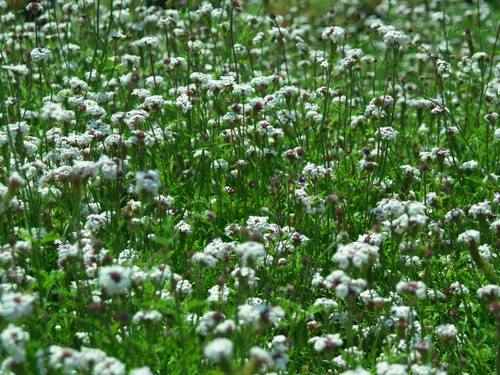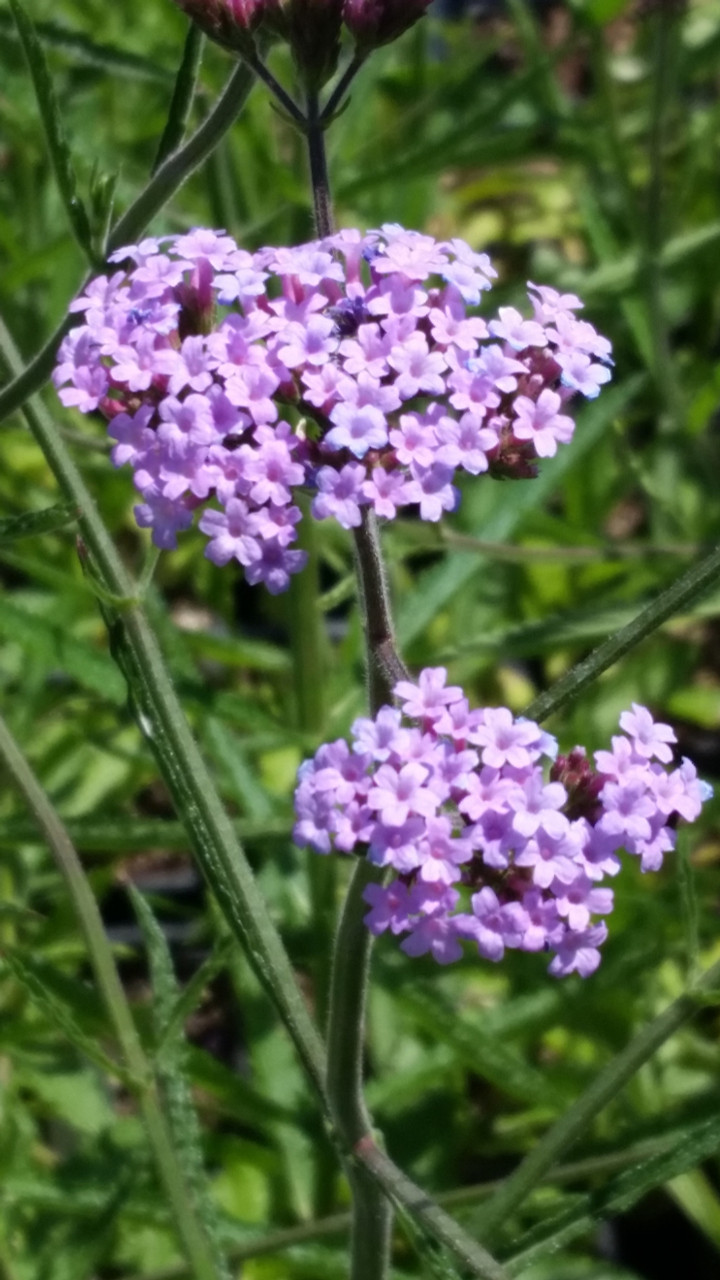

Verbena bonariensis ‘Lollipop’ (Lollipop Verbena, Dwarf Purpletop Vervain) is a compact selection of South American purpletop vervain, a species native to Brazil, Argentina, Paraguay, and Uruguay. Selected for its shorter stature and denser branching, it produces airy clusters of lavender-purple flowers over a long bloom season while maintaining a more compact habit than the species. It is widely used in Southern California as a drought-tolerant perennial for pollinator gardens, water-wise landscapes, perennial borders, and commercial landscape plantings.
Quick Facts:
Botanical Name: Verbena bonariensis ‘Lollipop’
Common Name: Lollipop Verbena, Dwarf Purpletop Vervain
Plant Type: Herbaceous perennial; may be short-lived in some climates
Mature Size: Approximately 1–2 feet tall and wide
Exposure: Full sun
Water: Low to moderate
Soil: Well-drained soils; adaptable to sandy, loamy, rocky, and decomposed granite soils
Bloom Season: Late spring through fall
Flower Color: Lavender-purple
Wildlife Value: Attracts butterflies, native bees, honeybees, hummingbirds, and other pollinators
Origin: Cultivated selection of a South American species
Deer Resistance: Generally deer resistant
Landscape Uses: Pollinator gardens, perennial borders, commercial landscapes, streetscapes, parkways, containers, water-wise landscapes, and low-water plantings
Habit & Size: Forms a compact, rounded clump approximately 1–2 feet tall and wide, significantly shorter than the species, which commonly exceeds 4 feet in height. Plants produce upright, branching stems with sparse green foliage and flattened clusters of small lavender-purple flowers held above the leaves. Flowering typically begins in late spring and can continue into fall under Southern California conditions. The nectar-rich flowers attract butterflies, native bees, honeybees, hummingbirds, and other pollinators.
Cultural Requirements: Provide full sun for best flowering and strongest growth. Plants perform best in well-drained soils and benefit from occasional deep irrigation during establishment. Once established, ‘Lollipop’ tolerates periods of drought but generally flowers more consistently with moderate supplemental water during extended dry periods. Plants typically bloom most heavily in full sun; those grown in partial shade may become more open and produce fewer flowers. This cultivar performs well in both coastal and inland Southern California. Excessive irrigation or poorly drained soils may reduce longevity. Light deadheading can encourage continued flowering, although spent flower heads are often left in place for texture, seed value, and occasional reseeding.
Landscape Uses: ‘Lollipop’ is well suited for pollinator gardens, perennial borders, commercial landscapes, streetscapes, parkways, containers, and water-wise plantings where the height of traditional Verbena bonariensis would be excessive. Its open, transparent growth habit allows it to be planted among ornamental grasses, salvias, yarrows, buckwheats, and other drought-tolerant perennials while contributing seasonal color without creating a heavy visual mass. Because of its compact size, it is often easier to incorporate into commercial landscapes and residential planting designs where lower planting heights or maintained sightlines are desired.
Identification Note: Verbena bonariensis ‘Lollipop’ is distinguished from standard Verbena bonariensis by its shorter stature, denser branching habit, and more compact overall form. The flowers are similar in color and structure to the species but are produced on a significantly smaller plant. Unlike trailing hybrid verbenas commonly used as bedding plants, ‘Lollipop’ maintains an upright habit with open, airy flowering stems.
Pests and Cultural Considerations: This cultivar is generally free of serious pest or disease problems in Southern California. Occasional aphids, spider mites, or powdery mildew may occur under stressful growing conditions but are rarely severe. Plants may self-seed in favorable sites, although generally less aggressively than the species. Like many herbaceous perennials, plants are relatively short-lived compared to woody shrubs and may decline in vigor after several years. Cutting plants back lightly in late winter or early spring encourages dense new growth and continued flowering.
Frequently Asked Questions:
Is Verbena bonariensis ‘Lollipop’ native to California? No. It is a cultivated selection of a species native to Brazil, Argentina, Paraguay, and Uruguay.
Is ‘Lollipop’ evergreen? It is herbaceous and may retain foliage during mild winters in portions of Southern California but is not considered a true evergreen perennial.
Is ‘Lollipop’ drought tolerant? Yes. Once established, it performs well with relatively low supplemental irrigation, although occasional deep watering promotes more consistent flowering during prolonged dry periods.
Does ‘Lollipop’ attract pollinators? Yes. The nectar-rich flowers attract butterflies, native bees, honeybees, hummingbirds, and other pollinating insects.
Can it grow near the coast? Yes. It performs well in both coastal and inland Southern California when planted in full sun with well-drained soil.
How is ‘Lollipop’ different from standard Verbena bonariensis? ‘Lollipop’ is significantly shorter and more compact while retaining the upright, airy flowering habit and lavender-purple blooms of the species. This makes it easier to use in smaller spaces, commercial landscapes, parkways, containers, and planting designs where standard purpletop vervain would be too tall.
Is it suitable for California-friendly landscapes? Yes. Its drought tolerance, extended bloom season, and value to pollinators make it well suited for water-wise, pollinator-oriented, and low-maintenance landscape plantings throughout much of Southern California.
- Common Name:
- Dwarf Upright Verbena
- Mature Height:
- 1-2'
- Mature Spread:
- 1-2'
- Exposure:
- Sun
- Growth:
- Semi-dormant
- Flower Color:
- Purple
- Soil:
- Well drained best
- Foliage Color:
- Gray-Green w/burgundy
- Flower Time:
- Spring - Fall