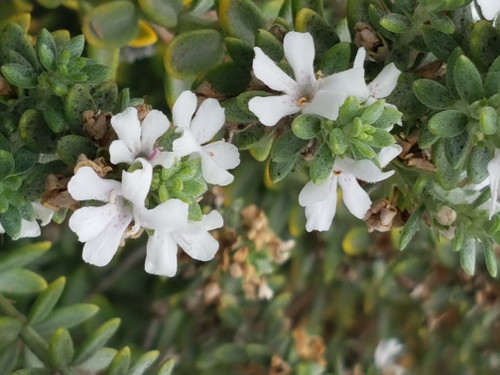
Westringia fruticosa ‘Morning Light’ (Morning Light Coast Rosemary, Variegated Coast Rosemary) is a variegated cultivar of Westringia fruticosa, an evergreen shrub native to coastal regions of eastern Australia. Selected for its compact growth habit and cream to yellowish-edged foliage, it provides year-round structure and foliage contrast in water-wise, coastal, and Mediterranean-style landscapes. Like the species, it is valued in Southern California for its adaptability, low water requirements once established, and tolerance of coastal conditions.
Quick Facts:
Botanical Name: Westringia fruticosa ‘Morning Light’
Common Name: Morning Light Coast Rosemary, Variegated Coast Rosemary
Plant Type: Evergreen shrub
Mature Size: Approximately 1–3 feet tall and 2–3 feet wide
Exposure: Full sun to light shade
Water: Low once established; moderate irrigation during establishment
Soil: Adaptable to a range of well-drained soils; tolerates clay soils if drainage is adequate
Bloom Season: Spring, with intermittent flowering possible under favorable conditions
Flower Color: White
Foliage Color: Gray-green with cream to yellowish margins
Wildlife Value: Flowers may provide nectar resources for bees and other pollinating insects
Origin: Cultivar of Westringia fruticosa, a species native to eastern Australia; cultivar origin is not well documented
Landscape Uses: Low hedges, borders, mass plantings, foundation plantings, mixed shrub plantings, commercial landscapes, streetscapes, residential plantings, coastal gardens, and water-wise landscapes
Habit & Size: Westringia fruticosa ‘Morning Light’ forms a compact, rounded evergreen shrub approximately 1–3 feet tall and 2–3 feet wide. The narrow, linear leaves are gray-green with cream to yellowish margins, creating a variegated appearance throughout the year. Small white flowers appear primarily during spring, with additional flowering possible during mild weather. The dense branching habit allows the plant to maintain a neat appearance with minimal pruning.
Cultural Requirements: This cultivar performs best in full sun, where foliage color and compact growth are strongest, but it tolerates light shade. It is well adapted to Southern California’s Mediterranean climate, including coastal areas, inland valleys, and urban landscapes. Once established, it requires relatively low supplemental irrigation, although occasional deep watering during prolonged dry periods can improve appearance. It tolerates a variety of soil types, including clay soils, provided drainage is adequate. Avoid consistently wet soils, as excessive moisture can contribute to decline.
Landscape Uses: ‘Morning Light’ is useful as a compact evergreen shrub for low hedges, borders, mass plantings, foundation plantings, and mixed shrub landscapes. Its variegated foliage provides contrast in drought-tolerant, coastal, Mediterranean-style, and contemporary landscapes. Its smaller mature size makes it appropriate for areas where a lower-growing evergreen shrub is desired, including commercial landscapes, streetscapes, and residential plantings.
Identification Note: Westringia fruticosa ‘Morning Light’ is distinguished from the species by its cream-edged variegated foliage and more compact growth habit. It may be confused with other variegated forms of Westringia, particularly Westringia fruticosa ‘Smokey’ in the wholesale nursery industry. ‘Smokey’ generally has a more gray overall appearance, while ‘Morning Light’ shows more cream to yellowish tones. Although commonly called Coast Rosemary, it is not related to culinary rosemary (Salvia rosmarinus / Rosmarinus officinalis).
Pests and Cultural Considerations: This cultivar is generally low maintenance when grown in appropriate conditions. The most common cultural issue is decline caused by poor drainage or excessive irrigation. Periodic light pruning can help maintain density and shape, but heavy shearing should be avoided if a more natural form is desired. Like other woody evergreen shrubs, older stems may be slower to regenerate after severe pruning. Branches or small sections of foliage may occasionally revert to the green foliage color typical of the species and can be pruned out if desired.
Frequently Asked Questions:
Is Westringia fruticosa ‘Morning Light’ native to California? No. It is a cultivar of Westringia fruticosa, a species native to eastern Australia.
Is ‘Morning Light’ evergreen? Yes. It retains foliage throughout the year and provides year-round structure in the landscape.
How large does ‘Morning Light’ grow? It typically grows approximately 1–3 feet tall and 2–3 feet wide, making it a compact form of Westringia fruticosa.
Is ‘Morning Light’ drought tolerant? Yes. Once established, it has low water needs and performs well in drought-tolerant Southern California landscapes.
Can ‘Morning Light’ grow near the coast? Yes. It performs well in coastal environments and tolerates coastal exposure, including salt spray conditions.
Can ‘Morning Light’ grow inland? Yes. It adapts well to inland Southern California landscapes when provided adequate drainage and occasional irrigation during periods of extreme heat or prolonged dryness.
Does ‘Morning Light’ attract pollinators? Its flowers may be visited by bees and other pollinating insects.
Can ‘Morning Light’ grow in clay soil? Yes, if drainage is adequate. It does not perform well in persistently wet soils.
Can ‘Morning Light’ be used as a hedge? Yes. Its dense branching habit makes it suitable for low hedges and borders, though it is not a tall screening plant.
How is ‘Morning Light’ different from standard Westringia fruticosa? The primary differences are its cream-edged variegated foliage, smaller mature size, and more compact growth habit compared with the larger green-leaved species form.
Can the variegation in ‘Morning Light’ revert? Yes. At times, single branches or small sections of foliage may revert to the green foliage color typical of the species. These reverted shoots can be pruned out if desired.
What other variegated forms is ‘Morning Light’ confused with? ‘Morning Light’ is often confused with Westringia fruticosa ‘Smokey’ in the wholesale nursery industry. ‘Smokey’ generally has a more gray overall appearance, while ‘Morning Light’ shows more cream to yellowish tones.
- Common Name:
- Variegated Australian Rosemary
- Mature Height:
- 1-3'
- Mature Spread:
- 2-3'
- Exposure:
- Sun/Part Sun
- Growth:
- Evergreen
- Flower Color:
- White
- Soil:
- Well drained best
- Foliage Color:
- Green-White Variegated
- Flower Time:
- Spring